Hey there! As a supplier of Collaborative Welding Robots, I’ve seen firsthand how these nifty machines are changing the game in the welding industry. In this blog, I’m gonna break down how these robots interact with human workers, and why it’s a match made in heaven. Collaborative Welding Robot
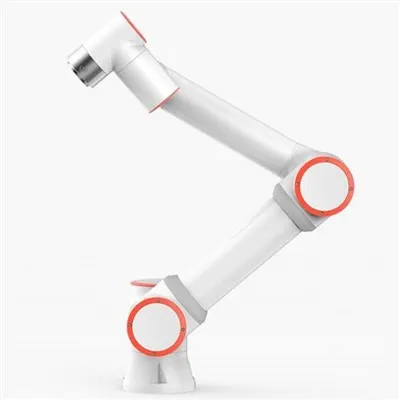
Let’s start with the basics. A Collaborative Welding Robot is designed to work side – by – side with human operators. Unlike traditional industrial robots, which are usually caged off for safety reasons, collaborative robots can share the same workspace with humans without the need for heavy safety barriers. This is all thanks to advanced sensors and safety features.
One of the key ways these robots interact with human workers is through power and force limiting. The robot is built to detect if it comes into contact with a human. If there’s an unexpected collision, the robot will immediately stop its movement. This is super important because it allows human workers to work around the robot without fearing for their safety. For example, a welder can walk up to the robot, make some adjustments to the welding path, or grab a tool from the area near the robot without worrying about getting injured.
Another cool interaction method is through teach – by – demonstration. This is like showing a robot how to do a dance step by step. A human worker can physically guide the robot’s arm through the welding path. The robot then remembers the path and the movements, and can repeat the process later on. This is a great way to quickly program the robot for new welding tasks. Say a welder has a unique job that requires a specific welding pattern. Instead of spending hours writing complex code, they can simply take the robot’s arm and show it what to do. It’s as easy as ABC!
Now, communication is a two – way street. These robots can also provide feedback to human workers. They’re equipped with sensors that monitor things like welding quality, temperature, and the amount of welding wire used. If there’s an issue, like a poor weld or if the welding wire is running low, the robot can send an alert to the worker. This could be in the form of a visual signal on a control panel or an audible beep. The worker can then take immediate action to fix the problem, ensuring high – quality welding results every time.
Collaboration also happens during the planning phase. A human worker can use a tablet or a computer to work on the welding plan with the robot. They can design the welding path, set the appropriate parameters like welding speed and current, and visualize how the final weld will look. The robot can offer suggestions based on its built – in algorithms and past experience, making the planning process more efficient. For instance, if the worker is planning to weld a complex joint, the robot can indicate the best approach based on factors like heat distribution and material properties.
In a production environment, the interaction between the robot and human workers can significantly improve productivity. The robot can handle the repetitive and precise part of the welding process. While it’s busy welding a long seam with consistent quality, the human worker can focus on other important tasks. They can inspect the incoming materials, prepare the next workpieces, or perform some quality control checks on the already welded parts. This division of labor ensures that the overall production flow is smooth and efficient.
But it’s not all about work. The presence of a collaborative welding robot can also make the job more enjoyable for human workers. These robots can take on the strenuous and dangerous aspects of welding, like working in tight spaces or in high – heat environments. Workers don’t have to put their bodies through the same level of physical strain, which means less fatigue and fewer work – related injuries. It’s kind of like having a strong, reliable assistant who takes on the tough jobs.
Now, let’s talk about the learning curve. You might think that working with a high – tech robot would be difficult, but it’s actually not that hard at all. Most collaborative welding robots are designed with user – friendly interfaces. Even a worker with limited technical knowledge can learn how to operate and interact with the robot in a relatively short time. Training programs are also available to help workers get up to speed quickly. So, there’s no need to be intimidated by these robots.
In terms of adaptability, these collaborative robots are like chameleons. They can easily adapt to different types of welding jobs. Whether it’s spot welding, seam welding, or even some complex 3D welding tasks, the robot can be re – programmed to handle the job. And since it can work closely with human workers, the team can quickly adjust to changing production requirements. For example, if there’s a sudden order for a different type of product, the human – robot team can re – plan the welding process in no time.
Speaking of cost – effectiveness, having a collaborative welding robot in your team can save you a lot of money in the long run. First of all, the reduced risk of human injury means lower insurance costs and fewer lost workdays. Second, the high – quality and consistent welding results mean less waste and fewer re – works. And because the robot can work continuously without getting tired, you can increase your production output without having to hire extra workers. It’s a win – win situation for everyone.
So, if you’re in the welding industry, and you’re looking to take your business to the next level, a collaborative welding robot could be the answer. The seamless interaction between these robots and human workers can bring a whole new level of efficiency, quality, and safety to your welding operations.

If you’re interested in learning more about our Collaborative Welding Robots or want to discuss a potential purchase, don’t hesitate to reach out. We’re here to answer all your questions and help you find the perfect solution for your business.
Collaborative Palletizing Robot References:
- Industry reports on welding technology advancements
- Case studies on the implementation of collaborative robots in welding
- Technical manuals of collaborative welding robots
Xinweilai Intelligent Technology (Shandong) Co., Ltd.
As one of the most professional collaborative welding robot manufacturers and suppliers in China, we’re featured by quality products and good service. Please rest assured to wholesale bulk customized collaborative welding robot from our factory. For pricelist and quotation, contact us now.
Address: Jinghua Road, Economic and Technical Development Zone, Dezhou City, Shandong Province
E-mail: liujiqing@xinweilaiznkj.com
WebSite: https://www.xinweilaiznkj.com/
