Balancing the workpiece on a portable lathe is a crucial skill that directly impacts the quality of machining operations. As a supplier of portable lathes, I’ve witnessed firsthand the challenges that operators face when trying to achieve optimal balance. In this blog, I’ll share some practical tips and techniques to help you balance your workpiece effectively on a portable lathe. Portable Lathe

Understanding the Importance of Workpiece Balance
Before delving into the balancing process, it’s essential to understand why workpiece balance matters. When a workpiece is not properly balanced on a lathe, it can lead to several issues, including:
- Vibration: Unbalanced workpieces cause excessive vibration during machining, which can affect the surface finish of the workpiece and reduce the tool life.
- Poor Accuracy: Vibration can also lead to inaccuracies in the machining process, resulting in parts that do not meet the required specifications.
- Safety Hazards: Excessive vibration can cause the workpiece to become loose or even fly off the lathe, posing a significant safety risk to the operator.
By ensuring that your workpiece is properly balanced, you can minimize these issues and achieve better machining results.
Preparing the Workpiece for Balancing
The first step in balancing a workpiece on a portable lathe is to prepare the workpiece itself. Here are some key considerations:
- Clean the Workpiece: Remove any dirt, debris, or burrs from the workpiece to ensure a smooth and even surface. This will help to prevent uneven weight distribution and improve the accuracy of the balancing process.
- Inspect the Workpiece: Check the workpiece for any signs of damage or defects, such as cracks or warping. A damaged workpiece may not balance properly and could pose a safety hazard during machining.
- Mark the Workpiece: Use a marker or scribe to mark the center of the workpiece. This will help you to align the workpiece correctly on the lathe and ensure that it rotates evenly.
Mounting the Workpiece on the Lathe
Once the workpiece is prepared, the next step is to mount it on the lathe. Here are some tips to ensure a secure and accurate mounting:
- Choose the Right Chuck: Select a chuck that is appropriate for the size and shape of the workpiece. The chuck should be able to grip the workpiece firmly without causing any damage.
- Align the Workpiece: Use a dial indicator to align the workpiece with the lathe’s spindle. This will ensure that the workpiece rotates evenly and reduces the risk of vibration.
- Tighten the Chuck: Once the workpiece is aligned, tighten the chuck securely to prevent it from moving during machining. Use a torque wrench to ensure that the chuck is tightened to the recommended torque specification.
Balancing the Workpiece
After mounting the workpiece on the lathe, the next step is to balance it. There are several methods for balancing a workpiece on a lathe, including:
- Static Balancing: Static balancing involves placing the workpiece on a balancing stand and adjusting the weight distribution until it is balanced. This method is suitable for workpieces that have a relatively low rotational speed.
- Dynamic Balancing: Dynamic balancing involves spinning the workpiece on the lathe and using a balancing machine to measure the unbalance. The balancing machine then calculates the amount and location of the weight that needs to be added or removed to balance the workpiece. This method is more accurate than static balancing and is suitable for workpieces that have a high rotational speed.
Using a Balancing Machine
If you have a large number of workpieces to balance or if you need to achieve a high level of accuracy, using a balancing machine is recommended. Here are the steps involved in using a balancing machine:
- Mount the Workpiece: Mount the workpiece on the balancing machine according to the manufacturer’s instructions.
- Set the Parameters: Set the parameters of the balancing machine, such as the rotational speed and the balancing tolerance.
- Measure the Unbalance: Start the balancing machine and let it measure the unbalance of the workpiece. The machine will display the amount and location of the unbalance.
- Add or Remove Weight: Based on the measurement results, add or remove weight from the workpiece to balance it. This can be done by drilling holes, adding weights, or machining the workpiece.
- Recheck the Balance: After adding or removing weight, recheck the balance of the workpiece using the balancing machine. Repeat the process until the workpiece is balanced within the specified tolerance.
Tips for Achieving Optimal Balance
Here are some additional tips to help you achieve optimal balance when working with a portable lathe:
- Use High-Quality Tools: Using high-quality tools, such as chucks, collets, and tool holders, can help to improve the accuracy and stability of the machining process.
- Maintain the Lathe: Regularly maintain your portable lathe to ensure that it is in good working condition. This includes cleaning the lathe, lubricating the moving parts, and checking the alignment of the spindle.
- Follow the Manufacturer’s Instructions: Always follow the manufacturer’s instructions when using a portable lathe and a balancing machine. This will help to ensure that you are using the equipment correctly and safely.
- Practice Makes Perfect: Balancing a workpiece on a portable lathe requires practice and skill. Take the time to practice balancing different types of workpieces to improve your technique.
Conclusion
Balancing the workpiece on a portable lathe is an essential skill that can help you to achieve better machining results and ensure the safety of the operator. By following the tips and techniques outlined in this blog, you can effectively balance your workpiece and minimize the issues associated with unbalance, such as vibration, poor accuracy, and safety hazards.
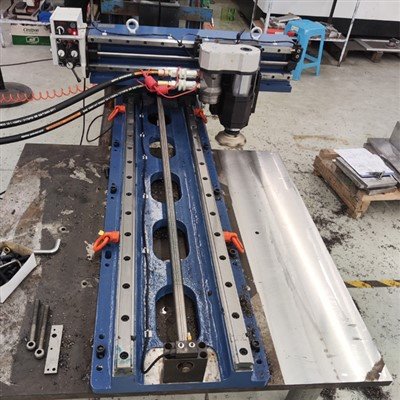
Linear Milling Machine As a supplier of portable lathes, we are committed to providing our customers with high-quality products and excellent customer service. If you have any questions or need assistance with balancing your workpiece on a portable lathe, please don’t hesitate to contact us. We would be happy to help you find the right solution for your needs.
References
- ASME B94.55M-1985. Methods for the Balancing of Single-Plane and Two-Plane Rotating Rigid Bodies.
- ISO 1940-1:2003. Mechanical vibration – Balance quality requirements for rotors in a constant (rigid) state – Part 1: Specification and verification of balance tolerances.
- Machinery’s Handbook, 30th Edition. Industrial Press, Inc.
Shangqiu JDA Machinery Technology Co., Ltd.
With abundant experience, we are one of the most professional portable lathe manufacturers and suppliers in China. We warmly welcome you to buy cheap portable lathe for sale here from our factory. Quality products and reasonable price are available.
Address: No. 55 Pingyuan Middle Road, Liangyuan District, Shangqiu, Henan, China
E-mail: sales@jdamachines.com
WebSite: https://www.jdamachines.com/
