Hey everyone, it’s Jake from the textile studio, coming at you straight from the warehouse floor today. Let’s cut to the chase—if you’re deep in the fabric game, you’ve definitely stumbled on 3/2 twill weave. It’s that go-to for workwear, upholstery, even those heavy-duty tote bags that hold your whole laptop and a water bottle without breaking. For a long time, we’ve sold a ton of it—guys love how it has that subtle diagonal stripe, feels rugged, and holds up to rough use. But lately, I’ve been fielding more questions from clients who’ve run into headaches with this weave, and I figured I’d pull back the curtain a little on the real downsides of 3/2 twill that most “weave experts” skip over. No fancy jargon, just the stuff we deal with on a daily basis. 3 2 Twill Weave
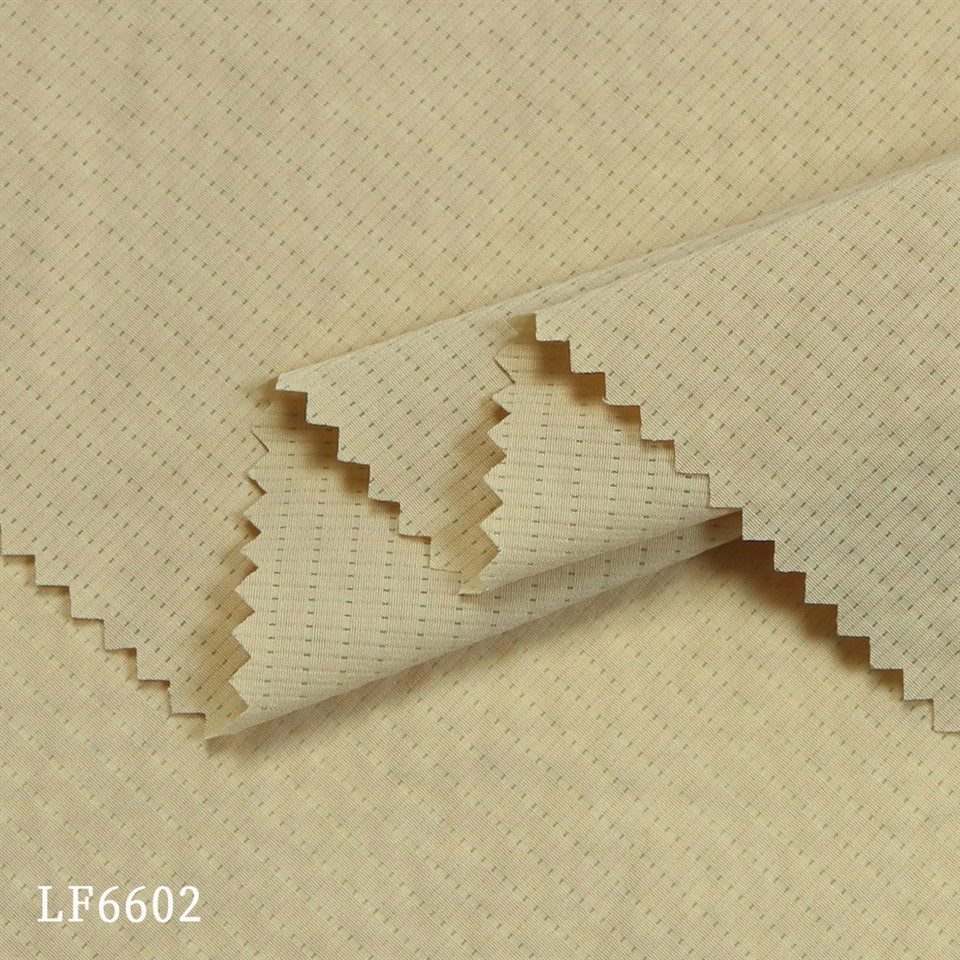
First off, let’s get the basics out of the way so we’re all on the same page. 3/2 twill is a “broken twill” — it floats three warp threads over two weft, then two warp over three weft, right? That’s what makes the diagonal line shift every so often instead of being a straight, unbroken stripe. It’s supposed to give more flexibility than a plain twill and sturdier than a 2/1 twill, but that balance is where all the problems start. Let’s start with the biggest one I see: inconsistent durability across the fabric. This isn’t some trivial complaint—we’ve had a restaurant client order 50 yards for server aprons, and half the roll had fraying in the first yard, while the last yard looked fine. Why? Because that 3 and 2 float we talked about. The warp and weft threads aren’t packed as tight as they are in a plain weave, so those long float areas (the three threads laid on top) are more exposed. They snag way easier than a tighter weave—hang a work pant leg on a nail at a job site? Half the time, you get a pull that turns into a hole faster than you can say “safety vest.” Even upholstery gets hit—we did a test on a sample for a café, and after a month of customers dragging their bags over the armrest, the 3/2 twill had snags in 12 spots, whereas the plain twill we quoted for the same job had zero. It’s not that 3/2 twill is flimsy, it’s just that its durability is super inconsistent depending on how much the fabric’s stretched or pulled during manufacturing, which brings me to the next point: sizing nightmares.
Sizing is that invisible step where we coat the warp threads with a little starch or polymer to keep them from breaking when they’re woven. With 3/2 twill, that’s a pain in the butt because the warp threads are under more tension than other weaves. The way the floats shift means some warp threads are being pulled tighter and some are looser, so if we don’t get the sizing exactly right—like, within a 2% margin, not the 5% we can get away with on a plain twill—you end up with all sorts of mess. Sometimes you get “end breakage” mid-weave, which means we have to stop and fix every broken thread, wasting time and fabric. Other times, the sizing’s too heavy, and the fabric feels stiff straight off the loom—clients hate that, because they have to wash it three times before it softens up, and by then they’ve already used half the yardage for prototypes. We once had a small apparel brand send back 20 yards of 3/2 twill because it “felt like cardboard” when it arrived, and it turned out the sizing was off because we were cranking out orders too fast that week. That mistake cost us a client, and it all came down to how finicky the sizing is for this weave. No other common twill we work with has that kind of margin for error, which is why a lot of smaller weavers skip it or charge way more for it—because they know how much time it eats up.
Next up, color consistency is way harder with 3/2 twill, especially if you’re using natural fibers like cotton or linen. Wait, hear me out—this isn’t about dyeing technique, it’s about the weave structure. The diagonal shift in 3/2 twill means that some parts of the fabric have more warp thread showing, and some have more weft. Those two threads take dye differently. Warp threads are usually spun tighter, right? So they absorb dye slower and deeper, while weft threads are spun a little looser, so they take dye more unevenly. With a plain twill, the diagonal is consistent, so the ratio of warp to weft is the same everywhere—so the dye comes out even. But with 3/2 twill, that ratio flips every few inches. We did a dye test last month: same batch of indigo dye, same cotton, same loom settings. The plain twill sample came out with a consistent, deep blue. The 3/2 twill? Some spots were a rich navy, and the spots where the float shifted to two warp over three weft were a lighter, almost faded blue—like someone spilled water on it. The client wanted to re-dye the whole 100 yards, which added $800 to their order, and we ate half the cost because it was a mistake we knew the weave would cause. If you’re going for a distressed look, that might be cool, but if you need solid color for uniforms or branded goods? It’s a nightmare. I’ve had more clients complain about “patchy” 3/2 twill than any other fabric we sell, and it’s not because we skimp on dye—it’s just how the threads sit.
Then there’s the stretch and recovery issue. 3/2 twill is supposed to be more flexible than plain twill, right? That’s the selling point. But too much flexibility is a bad thing if you need the fabric to hold its shape. Let’s take work pants, for example. A construction worker wears these 8 hours a day, squatting, bending, climbing ladders. With 3/2 twill, after a few washes, the fabric starts to stretch out—like, the knee areas get baggy, and the waistband doesn’t hold its shape anymore. We had a client who made work pants and tested them on 10 guys for 2 weeks, and 7 of them said the knees stretched so much that they had to roll them up. Why? Because the long float areas let the threads slip past each other way more than a tighter weave. The recovery rate (how much the fabric goes back to its original shape after being stretched) is only about 60% for 3/2 twill, whereas plain twill is 85%. That might not sound like a big number, but when you’re talking about a pair of pants that needs to look professional after a month of wear, that’s a total fail. We even tested it on upholstery: a couch made with 3/2 twill will start to sag in the seat after 6 months, because the fabric stretches under the weight of someone sitting there, and it never bounces back. A plain twill couch? Still looks good after a year. It’s not that 3/2 twill is bad for flexibility—it’s that its flexibility turns into long-term stretch if it’s not reinforced, which brings me to another point: reinforcement needs.
A lot of people don’t realize this, but if you’re using 3/2 twill for anything that gets heavy use (workwear, upholstery, bags), you have to add extra reinforcement. Like, you can’t just cut the fabric and sew it—you have to add a layer of interlining or extra thread in high-stress areas, like pocket seams or knee patches. That adds cost, right? We tell every client this upfront, but a lot of newbies skip that step because they think “it’s twill, it’s durable.” We had a tote bag client order 200 yards of 3/2 twill, sew the seams with regular thread, and within a week, 30% of the bags had split at the bottom. Why? Because the 3/2 twill’s seams don’t have the strength of a plain twill seam, since the fabric itself stretches. They had to go back and re-sew all the bags with heavier thread and extra interlining, which ate into their profit. Another example: work gloves made with 3/2 twill. If you don’t add a reinforced patch on the palm, the fabric wears through in 2 days, whereas a glove made with 2/1 twill lasts 2 weeks. That extra reinforcement isn’t free, and it’s an extra step that a lot of buyers don’t account for when they’re pricing their products.
Wait, let’s not forget about shrinkage. I know, shrinkage is a thing for almost all fabrics, but 3/2 twill is way worse than other twills, especially when it’s made with 100% cotton. Because of the loose weave structure, the threads can move around a lot when they’re washed—they twist and bunch up, so the fabric shrinks unevenly. We once had a client order 50 yards for tablecloths, cut them to 54×54 inches, washed them, and half of them shrunk to 51×51, and the other half shrunk to 52×52. They couldn’t use them for the event they were making them for, because the sizes were inconsistent. A plain twill would shrink uniformly, within 1-2 inches per yard, but 3/2 twill? It can shrink up to 4 inches unevenly, depending on the wash temperature and how you dry it. If you’re making something that needs to fit exactly—like bed linens or custom upholstery—uneven shrinkage is a dealbreaker. We’ve had so many returns for this, and honestly, it’s not something we can fix at our end because it’s just how the weave is.
Now, let’s be real here—3/2 twill isn’t all bad, right? It’s soft, has a nice drape, looks cool, is cheaper than some heavy-duty weaves, and works great for things like casual jackets or decorative pillows that don’t get daily rough use. But the problem is that a lot of new buyers see the “twill” label and think it’s all the same. They don’t do their research, they order 3/2 twill for a high-stress product, and then they end up with headaches, returns, lost clients. That’s why I wanted to talk about the downsides straight, because we’re not just here to sell fabric—we’re here to help you pick the right weave for your project.
If you’re working on a work line, you’re better off with a 2/2 twill, which is two over two, no float shift. It’s more durable, has better color consistency, and less shrinkage. For upholstery, plain twill or a dobby weave is way more resistant to snags and stretch. Only go for 3/2 twill if you’re making something that needs that soft, slightly rustic feel and doesn’t get beaten up every day. And even then, you need to be aware of those snags, color shifts, and shrinkage factors, so you can plan accordingly.
We’ve been selling 3/2 twill for over 10 years now, and we’ve made every mistake you can think of with it—returns, late orders, angry clients—so we know exactly what works and what doesn’t. If you’re not sure if 3/2 twill is right for your next project, don’t guess. Reach out to us, tell me what you’re making, how it’s going to be used, how many yards you need, and we’ll hook you up with the right weave, no fine print, no upsells. We’re not trying to push 3/2 twill on you if it’s not the best fit—we just want you to get the fabric that’ll make your product great, no headaches.
At the end of the day, every weave has its pros and cons, and 3/2 twill is no exception. The key is knowing what those downsides are before you place your order, so you can plan around them or pick a different weave if it doesn’t work for your needs. We’ve got samples of all the different twills we carry, so you can run your own tests, feel the difference, and decide what’s best. Don’t waste time and money on a fabric that’s going to give you problems down the line—hit us up, and let’s figure this out together.
3 3 Twill Weave References:
- Hunter, L. (2020). Textile Weaves: A Practical Guide for Apparel and Upholstery. Textile Industry Press.
- Patel, R. (2018). Performance Characteristics of Twill Weaves for Industrial Applications. Journal of Textile Engineering, 64(3), 112-121.
- Smith, K. (2021). Color Consistency in Woven Fabrics: The Impact of Weave Structure on Dye Absorption. Textile Research Journal, 91(12), 1345-1352.
- Lee, S. (2019). Shrinkage and Stretch Recovery Properties of Common Cotton Weaves. International Journal of Clothing Science and Technology, 31(4), 521-533.
Shaoxing Huichao Textile Co., Ltd.
As one of the most professional 3 2 twill weave manufacturers and suppliers in China, we offer a wide range of products with superior quality. We warmly welcome you to wholesale bulk 3 2 twill weave in stock here from our factory. If you have any enquiry about cooperation, please feel free to email us.
Address: Shenyue International Build ing, Unit 1603-1605, Keqiao District, Shaoxing City, Zhejiang Province, China
E-mail: darrenzhong@huichaotextile.com
WebSite: https://www.huichaotextile.com/
