If you’ve ever sourced molybdenum sheets and plates for high-temperature applications—think vacuum furnaces, aerospace components, or semiconductor manufacturing—you know creep is non-negotiable. Creep, that slow, time-dependent deformation of materials under constant stress at elevated temperatures, can turn a seemingly perfect molybdenum part into a failed component long before its expected lifespan. As a molybdenum supplier who’s worked closely with engineers and R&D teams for over a decade, I’ve seen firsthand how skipping proper creep testing leads to costly delays, faulty parts, and frustrated clients. Today, I want to walk you through exactly how we measure the creep properties of molybdenum sheets and plates, because not all creep testing is created equal. This is the process we use in our in-house lab (and that we guide our customers through when they test our products) to deliver molybdenum that performs when it matters most. Molybdenum Sheets & Plates
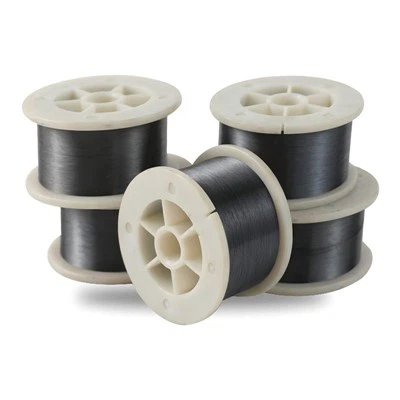
First, let’s get clear on why molybdenum’s creep behavior is so critical. Molybdenum has an extremely high melting point—2,623°C (4,753°F)—and excellent strength at temperatures up to 1,600°C, which is why it’s the go-to for so many high-heat environments. But even molybdenum isn’t immune to creep. If a molybdenum sheet used in a vacuum furnace hot zone creeps even a tiny amount over time, it can warp, short circuit heating elements, or contaminate the parts being processed. For aerospace engine components, creep can lead to catastrophic failure mid-flight. That’s why measuring creep isn’t just a quality check—it’s a necessity for ensuring reliability.
Now, let’s dive into the step-by-step process of testing creep in molybdenum sheets and plates. The first thing I always emphasize is sample preparation: bad samples give bad data, no matter how good your testing equipment is. Molybdenum is a hard, dense metal, so cutting it without introducing residual stress is a common pitfall. If you machine or saw a molybdenum sample too aggressively, you’ll leave internal stresses that skew creep results, making it look like the material is weaker than it actually is (or stronger, if you have a bad machining setup). At our lab, we use electrical discharge machining (EDM) to cut our samples, because EDM erodes material with controlled electrical sparks without applying mechanical force that causes residual stress. We follow ASTM E139 standards for creep testing, which specify the exact dimensions for sheet and plate samples. For thin sheets (0.1mm to 1mm thick), we use a miniaturized sample with a gauge length of 25mm and width of 6mm; for thicker plates (1mm and above), we use a standard 50mm gauge length and 12.5mm width. We also polish the gauge section (the middle part of the sample where deformation is measured) to a mirror finish, because surface scratches or imperfections act as stress concentrators that can initiate creep failure early, leading to inaccurate results. Next, we heat treat all samples after machining to relieve any remaining residual stress. Molybdenum gets brittle if it’s not properly stress-relieved, so we heat the samples in a high-vacuum furnace (10^-5 torr or lower) to 1,200°C for 2 hours, then cool slowly. This step ensures that any internal stresses left from machining are gone, so our creep data reflects the true material properties, not processing flaws.
Once our samples are prepared, the next step is setting up the creep test rig. Molybdenum’s creep is temperature-dependent, and it’s often tested at temperatures relevant to its end use—most of our customers test at 1,000°C to 1,800°C, since that’s where molybdenum sees the most stress. The test chamber we use is a high-temperature vacuum creep furnace, because molybdenum oxidizes rapidly above 400°C if exposed to air, and oxidation will drastically alter creep behavior. If we tested in air, the molybdenum would form molybdenum trioxide, which is brittle and weak, so our creep results would be meaningless for actual high-heat applications where molybdenum is used in vacuum or inert atmospheres. The furnace is equipped with precision temperature controllers that maintain ±2°C of the set temperature over the entire test period—even a 5°C fluctuation at 1,500°C can change creep rate by 10% or more, so precision is non-negotiable. We also use type B thermocouples (platinum-rhodium alloy) because they’re accurate up to 1,800°C, which is perfect for molybdenum testing.
Next, we mount the test sample in the load frame. The load frame applies a constant, uniaxial tensile load to the sample, which is what causes creep. We calculate the load based on the desired stress level—creep tests for molybdenum are typically run at stresses between 10 MPa and 100 MPa, depending on the application. For example, a molybdenum sheet used in a furnace door might be tested at 25 MPa, while a component in a rocket nozzle might be tested at 80 MPa. We use high-strength molybdenum grips to hold the sample in place, because using steel or other metal grips would introduce contamination at high temperatures and cause the grip to deform, which would pull extra load on the sample and skew results. We also make sure the sample is aligned perfectly in the load frame—even a tiny angular misalignment of 0.5 degrees can cause uneven stress across the sample, leading to premature failure in one spot. That’s why we use a laser alignment tool to check the sample’s position before applying any load; it’s an extra step that takes 5 minutes but saves us from days of bad test data.
Once the sample is in place and the chamber is pumped down to high vacuum, we start heating the sample to the test temperature. We let the sample soak at the test temperature for at least 1 hour before applying load, to make sure the entire sample reaches uniform temperature. If we apply load while the sample is still heating, the thermal expansion will add extra stress that doesn’t reflect actual operating conditions. When the sample is fully stabilized, we apply the constant load and start recording data. The key data we track is creep strain over time—strain is the amount of deformation in the sample, so we use high-temperature extensometers (devices that measure deformation) attached directly to the sample’s gauge section. Traditional extensometers don’t work at 1,500°C, so we use contact extensometers made of alumina or molybdenum, which can withstand those temperatures. The extensometer measures strain in real time, every 10 seconds, so we can track three distinct stages of creep: primary creep, where strain rate decreases as the material work-hardens; secondary creep, where strain rate is constant (the steady-state creep rate, which is the most important number for our customers); and tertiary creep, where strain rate increases as voids and cracks form in the material, leading to final failure.
Let’s talk about secondary creep, because that’s the property our customers care about most. The steady-state creep rate is how fast the molybdenum deforms over time under constant stress and temperature, and it’s what tells us how long the material will last in service. For example, if a molybdenum plate has a secondary creep rate of 1 x 10^-8 mm/mm per hour at 1,500°C and 50 MPa, that means it will only deform 0.001 mm per hour—hardly noticeable over a 10,000-hour furnace run. If the creep rate is 5 x 10^-8 mm/mm per hour, that’s 0.005 mm per hour, which would add up to 50 mm over 10,000 hours—way too much deformation. At our lab, we run each test for at least 1,000 hours, and many for 5,000 hours or longer, because we need enough data to get an accurate secondary creep rate. We also run replicate tests (usually 3 to 5 samples per test condition) to make sure our data is consistent. If one sample’s creep rate is 20% different from the others, we investigate—maybe there was a residual stress issue, or a temperature spike during testing, or a sample that had a microstructural flaw from the manufacturing process.
Microstructure is another big factor in molybdenum’s creep properties, and it’s something we always check after testing. Molybdenum sheets and plates are often produced with different grain structures—recrystallized vs. unrecrystallized (also called worked or strain-hardened). Unrecrystallized molybdenum has a fine, elongated grain structure, which gives it better creep resistance at lower temperatures (below 1,200°C), because the grain boundaries act as barriers to dislocation movement. Recrystallized molybdenum has larger, equiaxed grains, which is better at higher temperatures (above 1,200°C), because grain boundary sliding is the main creep mechanism there, and larger grains have fewer grain boundaries. That’s why when we test our molybdenum, we first identify the grain structure, because it changes the way creep behaves. We use optical microscopy and electron backscatter diffraction (EBSD) to look at the grain structure of the tested samples, so we can correlate the creep rate with the microstructure. For example, if a customer needs molybdenum for a furnace operating at 1,700°C, we’ll test our recrystallized molybdenum plates, because we know from past testing that their creep resistance is 30-40% better than unrecrystallized at that temperature.
I’ve seen too many cases where customers test molybdenum from suppliers that cut corners on creep testing. Some suppliers will only test at room temperature, which tells you nothing about high-temperature creep. Others will run tests for only 100 hours, not long enough to get a steady-state creep rate, so they fudge the data to make it look good. At our company, we don’t do that—every sheet and plate we sell comes with a creep test certificate that lists the test temperature, stress level, secondary creep rate, and grain structure, so our customers know exactly what they’re getting. We even offer custom creep testing for customers with specific applications—if you need molybdenum for a unique process at 1,650°C, we’ll run the test at that exact temperature, with your preferred stress level, to make sure our product meets your needs.
Wait, let’s address a common question I get from new customers: do you need to test every batch of molybdenum? The short answer is yes—because even with the best manufacturing processes, there can be slight variations in purity, grain size, or processing that affect creep. Molybdenum purity is huge too; even 0.1% of impurities like carbon, oxygen, or nitrogen can change creep rate by 20% or more. High-purity molybdenum (99.95% or higher) has much better creep resistance than lower grades, so when we test our molybdenum, we first check purity with glow discharge mass spectrometry (GDMS), so we can tie purity data directly to creep behavior. If you’re buying molybdenum sheets for a critical application, don’t settle for a supplier that can’t provide real creep data from tests done at relevant conditions.
Now, let’s wrap this up with a quick note on why this matters for you. If you’re an engineer sourcing molybdenum components, you don’t want to be the one whose part fails because of untested creep. If you’re a facilities manager responsible for a high-temperature furnace, unexpected molybdenum part replacement means downtime and lost production. As a molybdenum supplier who’s been in this game long enough to see these issues firsthand, we take creep testing seriously. We don’t just follow standards—we go above and beyond to make sure our molybdenum sheets and plates perform exactly as promised.
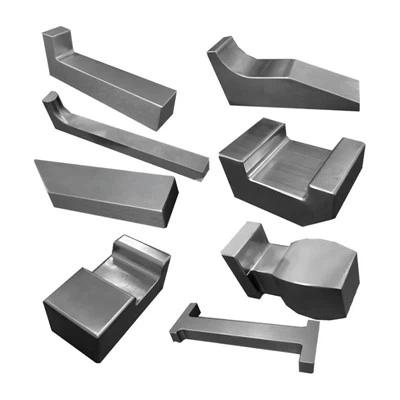
If you’re working on a project that requires molybdenum and you need reliable creep properties, or if you have questions about our testing process, we’re here to help. We can share past creep test reports, run custom tests for your specific conditions, and work with you to find the right molybdenum grade for your application. Don’t let untested creep lead to costly failures—reach out to us to discuss your molybdenum needs today.
Tungsten Copper Alloy References
- ASTM E139 – 11(2019), Standard Test Method for Conducting Creep, Creep-Rupture, and Stress-Rupture Tests of Metallic Materials
- Dieter, G.E., Mechanical Metallurgy, 3rd Edition, McGraw-Hill, 1986
- Sargent, C.M., et al., Creep Behavior of Molybdenum Alloys for High-Temperature Applications, Journal of Materials Engineering and Performance, Vol. 12, No. 5, 2003, pp. 547-554
- Kim, J.H., et al., Effect of Grain Structure on Creep Properties of Pure Molybdenum at Elevated Temperatures, Materials Science and Engineering: A, Vol. 429, No. 1-2, 2006, pp. 187-193
Address: Wangjing Science and Technology Park, Guangshun North Street, Chaoyang District, Beijing
E-mail: sales@moly-tungsten.com
WebSite: https://www.moly-tungsten.com/
