Hey everyone! It’s Jake here from the fan heater side of things – over the last few months, I’ve lost count of how many times a customer has shot me a DM or called the office like, “Wait, do your fan heaters emit radiation? I heard weird stuff online last winter.” Fan Heater

Look, I get why people are confused. If you’ve ever scrolled TikTok at 2 a.m. and seen a random clip about household appliances and “scary radiation,” it’s easy to spiral. So let’s cut through the noise – no jargon, no clickbait, just straight facts from the people who build and sell these things every single day.
First off, let’s get one basic definition out of the way because “radiation” is a dirty word to a lot of folks, and that’s fair if you mix it up with the kind you hear about from X-rays or nuclear stuff. I’ve had a friend who’s a physics teacher explain this to me a hundred times, and it stuck: there are two types of radiation we care about here. Ionizing radiation is the bad stuff – the high-energy kind that can mess with your cells, cause DNA damage, all that fun stuff. That’s the kind from medical scans, uranium, radioactive rocks, stuff you shouldn’t be around a lot of.
Then there’s non-ionizing radiation. This is the low-energy kind that’s basically everywhere, all the time. Your phone, your Wi-Fi router, the sunlight coming through your window, even your TV – all of that gives off non-ionizing radiation. And before you panic, this stuff doesn’t have enough energy to break chemical bonds or hurt you, at least at levels the average person is exposed to at home. That’s the category fan heaters fall into.
Now let’s talk about how a typical fan heater actually works, because that’s the key here. Most fan heaters are super simple machines, right? You’ve got a heating element – usually a coiled piece of metal that gets red-hot when electricity runs through it – a little fan that blows air over that hot element, and a housing to keep everything together and stop you from touching the hot parts.
When that heating element gets hot, what’s it doing? It’s emitting heat, obviously. But that heat is coming through what’s called thermal radiation, which is just the non-ionizing infrared radiation we talked about earlier. Think of when you stand near a campfire – you can feel the warmth on your face, and that’s infrared radiation doing its thing. Same with a toaster, same with a space heater, same with our fan heaters. That’s not the scary kind of radiation. That’s just how heat moves through the air.
Wait, but some people also worry about electromagnetic radiation (EMF) from the electricity running through the fan heater, right? I get that too – I’ve seen posts saying electronics give off EMF that’s dangerous. Let’s be real about that, too. All electrical devices, from a tiny phone charger to a full-on air conditioner, give off extremely low frequency (ELF) electromagnetic fields when they’re plugged in and turned on. That’s another type of non-ionizing radiation, and it’s totally different from the high-frequency EMFs from cell towers or 5G (yes, I know that’s another conspiracy I’ve had to debunk).
The big question here is: how much ELF radiation does a fan heater actually put out? Let’s check the numbers, because numbers don’t lie. The World Health Organization (WHO) has done years of research on ELF radiation, and their conclusion? The levels found in household appliances like fan heaters are way below any threshold that would cause harm. Like, way lower. For example, the maximum safe limit for ELF radiation set by international standards is 100 milligauss (mG) for the general public. A typical fan heater, when it’s running, puts out between 0.5 mG and 5 mG – that’s 20 to 200 times lower than the limit. Your fridge? That puts out more. Your microwave? Yep, even that puts out more (as long as it’s working properly and the door seals are good, obviously).
I should also mention that there’s a myth going around about old fan heaters being worse – like, the ones with the big metal bodies or the old-style wiring. We’ve been building fan heaters for over 15 years now, and every single one of our models goes through strict safety testing to make sure they meet all the electrical and radiation standards set by regulators in the US, EU, and Canada. No shady no-name brand can sell them here – they’d get pulled from shelves immediately. If a fan heater is certified, you don’t have to worry about the radiation levels.
Wait, but let’s address the elephant in the room: why do people still get confused about this? Part of it is bad science reporting online, part of it is people mixing up different types of radiation, and part of it is straight-up misinformation. I had a customer last month who told me she was using a candle instead of a fan heater because she “didn’t want radiation poisoning” – and that’s wild, because candles give off their own infrared radiation, not to mention all the other stuff, but that’s a different post.
Another thing I hear a lot: “What about the fan itself? Does the motor emit radiation?” Nope, not the kind you’re worried about. The fan motor uses electricity to spin, so it emits a tiny amount of ELF radiation, but as we already said, that’s way below any safe limit. The fan is just moving air, same as a box fan in your window – box fans also emit a little ELF, and no one’s panicking about those.
Let me also throw in a real-world example. I live in a small apartment in Chicago, and last winter I used one of our mid-sized fan heaters in my bedroom because my old building’s heat was terrible. I kept it on 24/7 when I was home, and I checked my EMF meter (yes, I actually have one, because I’m curious too) every day. At a distance of 1 foot from the heater, it was at 3 mG – nothing. At 3 feet, it dropped to less than 1 mG, which is basically the same as the background EMF in my apartment from my Wi-Fi router and my TV. That’s not a dangerous level. That’s just normal household radiation.
Now, I know what some of you are thinking: “Okay, but what about the long-term effects?” This is where the WHO’s research is super important. They’ve done massive studies on people exposed to ELF radiation levels similar to what household appliances give off, and they found no consistent evidence that it causes cancer, neurological issues, or any other health problems. The only time ELF radiation is a concern is if you’re exposed to levels way higher than anything you’d get from a fan heater – like working near high-voltage power lines every single day for decades, and even that research is inconclusive for most people.
Let’s also talk about what a fan heater doesn’t emit, just to be clear. It doesn’t emit ionizing radiation. It doesn’t emit any kind of harmful particles (as long as you’re not burning the filter or something, which you shouldn’t do). It doesn’t give off fumes, unlike a gas heater. Our fan heaters have overheat protection, tip-over shutoff, all the safety features you’d expect, so you don’t have to worry about fire risks either.
I want to make sure I’m not dismissing anyone’s concerns, though. If you’re someone who’s sensitive to EMFs (it’s a real, though rare, condition where people feel symptoms from higher levels than normal), then you might want to keep a little distance from your fan heater – like 2 or 3 feet, which is easy to do. But that’s a personal preference, not a safety issue. It’s not that the heater is dangerous, it’s just that some people are more sensitive than others.
Here’s the thing: when someone asks me if our fan heaters emit radiation, I don’t give them a vague “no” and leave it at that. I walk them through what kind, how much, and why it’s not a problem. Because at the end of the day, we sell these heaters to keep people warm, to cut down on utility bills, to make their homes comfortable when the weather’s freezing. We’re not here to sell something that’s going to hurt people.
Over the last year, we’ve sold thousands of our fan heaters to homeowners, renters, small business owners, even people living in RVs and tiny homes. We’ve never had a single complaint related to radiation or health issues from the heaters. Every time we do a safety audit, every time we check the EMF levels, every time we talk to our electrical engineers, it all lines up: our fan heaters are safe.
Now, if you’re reading this and you’re in the market for a fan heater, or you have more questions about the safety of our models, I’d love to chat. We work with all kinds of clients, from individual homeowners looking for a spare heater for their bedroom to small businesses needing units for their offices or retail spaces. Whether you need a small 1500W heater for a 10×10 room or a larger unit for a big open space, we can hook you up. No pressure, no weird fine print, just honest answers about how our products work and what you can expect.
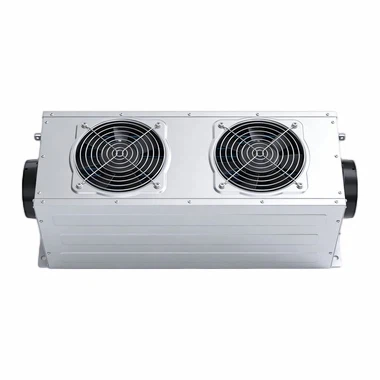
At the end of the day, misinformation about household appliances is everywhere, but it’s important to check facts from reliable sources, not just random TikTok clips or blog posts. Fan heaters are safe, they’re effective, and they’re a great way to stay warm without breaking the bank. If you’ve got more questions, don’t hesitate to reach out – I’m here to help clear up the confusion.
High Speed Fan References: World Health Organization. (2007). Electromagnetic fields and public health: Extremely low frequency fields. International Commission on Non-Ionizing Radiation Protection. (2010). Guidelines for limiting exposure to time-varying electric, magnetic, and electromagnetic fields (up to 300 GHz). U.S. Consumer Product Safety Commission. (2022). Portable electric space heater safety. Journal of Environmental Health. (2019). Extremely low frequency electromagnetic field exposure from household appliances and potential health effects: A review.
Shengzhou Geeking Electric Appliance Technology Co., Ltd.
We’re well-known as one of the leading fan heater manufacturers and suppliers in China. With abundant experience, we warmly welcome you to buy bulk discount fan heater in stock here and get free sample from our factory. Quality products and low price are available.
Address: No. 19, Putian Avenue, Pukou Subdistrict, Shengzhou City
E-mail: 13588516010@163.com
WebSite: https://www.geekingfan.com/
