If you’ve ever wandered the crowded hallways of a middle school or high school during the chaotic 10-minute passing period, you’ve probably glanced at rows of metal school lockers stacked floor to ceiling, each one a small, individual storage space for textbooks, gym gear, and personal items. As a school lockers supplier who’s spent the last 12 years talking to administrators, teachers, and even students about what works (and what drives them crazy) when it comes to locker setups, one question I hear more than any other is this: “Do school lockers come with keys?” School Lockers
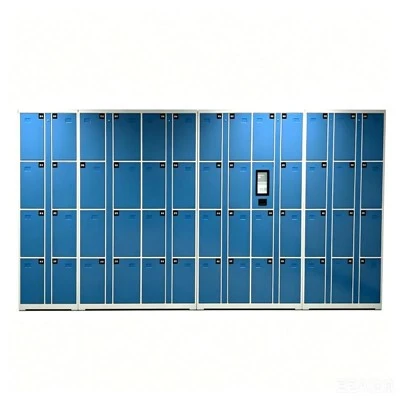
The short answer is yes—for the most part. But like so many things in K-12 facilities, that answer isn’t a one-size-fits-all. Over the years, I’ve sat through budget meetings where principals argue over whether to spring for master key systems or skip metal keys entirely, listened to vice principals lament about lost keys costing the district thousands of dollars a year, and even had a high school student stop me in the hallway to ask if there’s a way to get a locker that doesn’t require carrying yet another thing. Let’s break this down, from the basics of what most new lockers include, to the exceptions that make sense for different school communities, and what suppliers like us are doing to adapt as schools evolve.
First, let’s start with the standard, because that’s where most schools begin. When you order a set of school lockers for a new building or a full replacement project, every single locker unit—whether it’s a single-tier, double-tier, or four-tier design—comes with a locking mechanism. For decades, that mechanism was a simple pin tumbler lock paired with a metal key. Each locker gets a unique key, and the district gets a master key that can open every single locker in the set. That system works for a lot of reasons. It’s familiar: students and staff have used metal keys their whole lives, so there’s no learning curve. It’s durable: metal keys don’t die like batteries, don’t break if they’re jostled in a backpack, and work even in the cold, dry hallways of a northern high school or the humid, salt-air hallways of a coastal middle school. And it’s easy to manage, at least on the surface: if a student loses their key, the custodian can grab a spare from the main office, or the master key can be used to pop the lock and replace it.
But here’s the thing: that standard setup isn’t the only option. In the last 10 years, we’ve seen a huge shift in what schools ask for when they order lockers, and that’s changed how keys (or no keys) factor into the process. Let’s talk about the reasons schools might deviate from metal keys, because they’re rooted in real problems that districts deal with every day.
The biggest pain point? Lost keys. I don’t think people realize how much time and money that costs. Let’s do a quick math exercise, using numbers from the National Center for Education Statistics (NCES): the average US public high school has about 600 lockers. If a district has 10 such schools, that’s 6,000 lockers. On average, each key replacement (the lock itself plus a new key, plus the custodian’s time to rekey it or cut a new key) costs roughly $15. Multiply that by 1,000 lost keys a year per district—conservative, I’ve seen districts with double that number—and you’re looking at $15,000 a year just for lost metal keys. That’s money that could go to textbooks, art supplies, or counselor salaries, right there. No wonder so many schools have started exploring alternative locking systems.
But before we write off metal keys entirely, let’s talk about where they still make the most sense. Small, rural schools are a perfect example. A rural K-8 school with 200 lockers doesn’t have the same scale key problem as a large urban high school. Their budgets are often tighter, and metal key systems are cheap, reliable, and easy for a part-time custodian to manage. I sold lockers to a school in western Ohio last year, population 180 students total. They ordered all their standard single-tier lockers with metal keys, and when I asked why they didn’t go with a combination or electronic lock, their facilities director laughed and said, “We don’t have time to troubleshoot fancy locks, and half our students don’t have smartphones anyway. If a kid loses a key, we cut a new one for $2 and that’s it.” That’s the reality for a lot of small schools, and we never push a solution that doesn’t fit their needs.
Now, the alternative locking systems that are growing in popularity—combination locks, specifically—are the most common swap schools make when they move away from metal keys. Combination locks don’t require a separate key; each locker has a dial that the student sets to a unique 3- or 4-digit code, which they memorize or write in a safe place (not on the locker, we always remind them). The biggest upside here is no lost keys. That same Ohio district I mentioned earlier actually considered combination locks for half their lockers, but switched back after a year because students were writing their codes on their notebooks, and the combination locks were cheaper for small sets. But for a large school, combination locks can cut key-related costs by 90% almost immediately. I worked with a high school in Phoenix with 1,200 lockers three years ago; they switched to combination locks for all new lockers, and their key-related expenses dropped from $22,000 a year to $1,800. That’s real money that went back to their special education program, which was a huge win.
But combination locks have their own flaws, too. I’ve heard countless stories of students forgetting their codes, or writing them down and losing the paper, leading to the same kind of lockouts that happened with lost keys. And for schools that want to reassign lockers at the start of each semester—common in middle schools where students get a new locker each year—combination locks mean you have to reset every single lock, which takes custodial time. Electronic locks, the third major option, solve a lot of these problems, but they come with tradeoffs too. Electronic locks (usually powered by small, replaceable batteries) can be operated with a student ID card, a unique PIN, or even a smartphone app. That means no lost keys, no forgotten combinations, and if the school reassigns lockers, they can reset the code or card remotely in seconds, instead of having to visit each locker. They’re also great for schools that want to track access—if a locker is broken into, the admin can pull a log of who accessed it.
The catch with electronic locks? Cost, and maintenance. A single electronic locker lock costs roughly $40 to $60, compared to $10 to $15 for a standard metal key lock. Over 1,200 lockers, that’s an extra $36,000 to $54,000 upfront, which is a big ask for tight school budgets. And batteries have to be replaced every 1 to 3 years, depending on usage, which adds ongoing costs. We’ve seen schools opt for electronic locks only for their main hallway lockers, or for gym lockers that get heavy use, and keep metal keys or combination locks for less frequently used storage spaces like art room supply lockers.
Another thing I’ve noticed over the years is that the answer to “Do school lockers come with keys?” is also tied to what the school is storing. Gym locker rooms, for example, are high-traffic areas where students might change shoes, store backpacks, and leave valuables. A gym locker with a metal key or combination lock makes sense there, because students are comfortable with those systems. But classroom lockers, which are often used to store textbooks and project materials for a whole semester, might work better with an electronic lock, since the school can keep track of who has access and reassign them easily at the end of the term.
I also want to address a common misconception I hear all the time: that schools are moving away from keys entirely. That’s not true. We still sell more lockers with metal keys than any other system, especially to small and mid-sized districts that just need a reliable, low-maintenance option. What’s changed is that schools now have more choices, and we as suppliers work with them to pick the right fit, not just push what’s cheapest or easiest for us. For example, last year we designed a custom set of lockers for a middle school in Chicago that has two sets of lockers: one set for core classes with electronic locks, and a smaller set for PE with combination locks, all of which came with every unit they ordered. The school didn’t have to pay for two separate systems, and it addressed both their key cost problem (from the core classes) and their lockout issue (from the PE wing).
If you’re a school administrator or facilities coordinator reading this, here’s what I want you to take away. First, don’t assume all lockers come with metal keys—ask your supplier about what locking options are included, and what the costs are for upgrading to combination or electronic locks. Second, don’t fixate on “no keys” as the end-all solution; weigh the upfront cost, ongoing maintenance, and your school’s specific needs. A small rural school with 100 lockers doesn’t need to drop $10,000 on electronic locks to save $1,500 a year on keys. A large urban high school with 1,000 lockers might find that electronic locks pay for themselves in 3 years.
And for what it’s worth, I’ve talked to hundreds of students over the years. I asked a group of 10th graders at a Denver high school last spring if they preferred keys, combinations, or electronic locks. Half said they hated carrying another key around, a third said they forgot combinations at least once a semester, and the rest didn’t care as long as they didn’t get locked out before class. It’s a small detail, but it matters—lockers are a big part of a student’s daily routine, and having a system that works for them makes a small difference in how they feel about school.
At the end of the day, the answer to “Do school lockers come with keys?” is: it depends, and that’s a good thing. For as long as I’ve been in this business, the best locker setups are the ones that work for the community they serve. If you’re looking to upgrade your school’s lockers, or just want to talk through what options make sense for your budget and student body, we’re here to help. Reach out to us to discuss your needs, and we’ll put together a customized plan that fits your school, no one-size-fits-all solutions required.
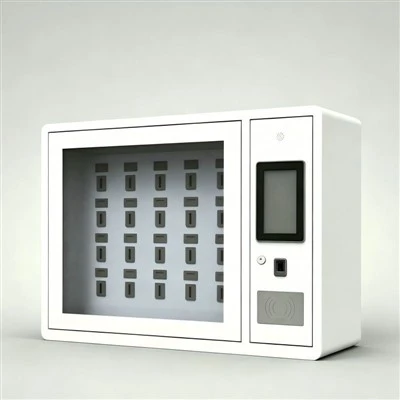
Phone Locker References
National Center for Education Statistics. (2022). Public School Locker Usage and Facilities Costs. U.S. Department of Education.
Education Week. (2021). Key and Lock Management Costs in U.S. K-12 Schools. Editorial Projects in Education.
National Association of School Business Officials. (2023). Facility Budgeting Guide for K-12 Districts. National Association of School Business Officials International.
Hangzhou Dongjie Intelligent Technology Co., Ltd.
Hangzhou Dongjie Intelligent Technology Co., Ltd. is one of the most experienced school lockers manufacturers and suppliers in China, also supports customized service. Please feel free to wholesale durable school lockers made in China here from our factory. For quotation, contact us now.
Address: 1st Floor, Building 2, No. 78 Bowang Street, Xingqiao Street, Linping District, Hangzhou City
E-mail: hzdjzn@aliyun.com
WebSite: https://www.cndongjiesmart.com/
