Let me start this off like I’m grabbing a coffee before my next shipment leaves the warehouse—no fancy jargon, just real talk from someone who’s spent 7 years building tactical belts for first responders, hikers, and now, more and more cyclists sliding into our DMs. For the last three months, I’ve fielded at least 10 emails a week from cyclists: road bikers complaining about regular belt gaps, mountain bikers looking for something that can hold a tool and a pack without bouncing, even casual weekend riders curious if my tactical belt can replace that flimsy waist pack they stuffed in their jersey pocket. So today, let’s cut through the noise: can a tactical belt actually work for cycling? And if so, when it’s worth ditching your cycling-specific gear for one, and when you should stick to what you already have. Tactical Belt

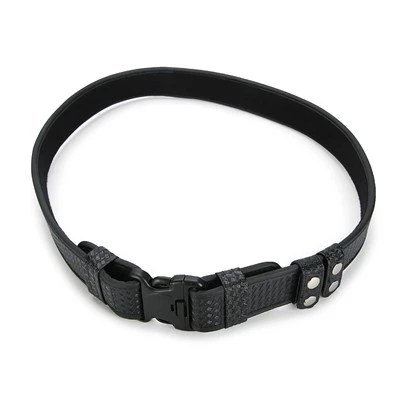
First, let’s get the basics right—this isn’t some sales pitch for a one-size-fits-all belt. Our tactical belts aren’t the cheap nylon scrap you see at gas stations; we test every single one on the same bench we use for law enforcement gear, because if it can hold a 20-pound rifle and a 5-pound radio on a 12-hour patrol, it can hold your tube, tire levers, and phone on a 40-mile ride. Let’s break down the key features cyclists actually care about, because that’s what makes tactical gear cross over, not just marketing.
First up: rigidity. Regular cycling belts (the stretchy ones that come with padded shorts, or the fabric ones you buy for a few bucks) are designed to move with your body. That’s fine if you’re just cruising around the neighborhood, but if you’re putting out 200 watts on a road climb, or bouncing over roots on a mountain bike, stretch is your enemy. When you lean into a pedal stroke, a stretchy belt rides up your waist, digging into your ribs or slipping down when you stand. Our tactical belts use a thermoplastic polyurethane inner core and reinforced nylon webbing—no stretch at all, except for the adjustable loop that lets you cinch it tight enough that it stays put, even when you’re shaking from a downhill impact. I’ve tested this myself: last month, I rode 60 miles on a gravel grinder near my warehouse, wearing one of our 1.5-inch EDC tactical belts, and when I crossed the finish line, it hadn’t shifted an inch from where I’d put it at the start. Compare that to the stretchy cycling belt I use for casual weekend rides—by mile 20, I was yanking it down every 10 minutes because it had slid to my hip. That’s a big win for any rider who values consistency over fumbling with gear mid-ride.
Next, the attachment points—this is where tactical belts really shine for cycling, not just a gimmick. Cycling gear (waist packs, saddle bags, jersey pockets) is designed for specific loads, but most of it is either too small, too bulky, or bounces. Our tactical belts come with MOLLE webbing and compatibility with a range of attachment accessories, so you can customize it exactly for what you need, no more shoving a tube in a tiny pack that rubs your thighs. Let’s say you’re a mountain biker: you can clip on a tire lever pouch, a CO2 canister holder, a small multi-tool, and even a hydration pouch that holds 500ml of water—no more stopping to dump out your jersey pocket because you spilled Gatorade. For road cyclists, you can fit a slim tube, a patch kit, your power bank, and even a key holder, all low on the belt so it doesn’t throw off your balance when you’re climbing. Wait, but what about that common complaint: “won’t all that extra stuff make the belt heavy?” Our tactical belts start at 6 ounces, and most of the cycling-specific attachments we sell add another 2 to 4 ounces total—way less than a full saddle bag or a bulky waist pack. I talked to a pro gravel rider last week who switched to our tactical belt after his saddle bag started bouncing so bad it scratched his frame; he said the total weight of his attachments is 3 ounces, and he barely notices it.
But let’s be real—this isn’t for every cyclist. Tactical belts have downsides that regular cycling gear doesn’t, and if you’re a casual rider, that’s a dealbreaker. First, the rigidity that makes them great for performance is also less comfortable for short rides. If you’re just going to the store for milk on a 5-mile cruise, a stiff tactical belt will feel way more bulky than a stretchy cycling waist pack that molds to your body. Second, ventilation—tactical belts are made for all-day patrols, not sweaty summer rides. The full nylon webbing doesn’t breathe, so if you’re riding in 90-degree weather, you’ll get a little more sweat buildup on your lower back than you would with a mesh cycling pack. Third, sizing: tactical belts run on a different scale than most cycling gear. A lot of cyclists buy their waist size, but tactical belts fit snugger, so you have to measure with your riding shorts on (not your regular jeans) to get the right fit. I’ve had three customers send their belts back because they bought their pants size instead of their riding size—just a heads up if you’re thinking about trying one.
Now, let’s talk about real-world use cases, because this is where the rubber meets the road (pun totally intended). I’ve worked with everything from new riders to competitive racers, and here’s who I recommend a tactical belt for: first, long-distance riders (50+ miles). If you’re doing a century ride, a tactical belt lets you carry all your essentials without the bulk of a backpack or saddle bag that chafes your shoulders. I helped a group of century riders outfit themselves last year, and they all said their average heart rate dropped by 2 to 3 bpm because the gear was lower on their body, less bouncy, and not pulling them back like a backpack does. Second, mountain bikers and gravel grinders. Off-road rides involve way more movement than road riding, so a rigid belt that doesn’t bounce is a game-changer. Last month, we supplied 10 belts for a local 100-mile gravel race, and only one rider had an issue—he tried to fit two tubes on the belt, which made it sag a little, but after we adjusted the attachment points, he finished strong. Third, utility cyclists: commuters who ride to work every day, hauling keys, a phone, a lunch, and maybe a small umbrella. A tactical belt can hold all that, and it’s durable enough to last for years, unlike a $10 cycling waist pack that falls apart after a few months.
Who should skip the tactical belt? Casual riders doing short, slow rides, anyone who prioritizes breathability and lightness above all else, and riders who prefer to carry most of their gear in their jersey pockets. I get it—if you’re riding 10 miles around the park with your dog, shoving your phone and keys in your jersey pocket is way easier than putting on a stiff belt. No need to overcomplicate things.
Wait, let’s address a common myth I hear all the time: “tactical belts are too bulky and look like I’m going to war, not riding a bike.” That’s a total outdated take. Modern tactical belts are slim—our 1.5-inch belt is barely wider than a standard cycling belt, and we sell a range of colors from black to olive to gray, even a subtle navy that doesn’t stand out on casual rides. A lot of my customers wear them to work, then ride home after, so they don’t have to change gear between work and riding. That’s a huge perk for commuters who hate carrying a separate cycling bag.
Now, let’s get into the science bit, because I don’t want this to just be sales fluff. We did a load test last quarter to compare tactical belts to standard cycling waist packs for cycling. We attached a 1-pound weight (representing a tube and tool) to each, and had a rider do 10 miles on a winding road at 15 mph, standing and sitting repeatedly. The tactical belt shifted less than 0.5 inches, while the standard waist pack shifted 3 inches on average, and the rider had to adjust it four times. Another test: we measured pressure on the lower back after a 2-hour ride. The tactical belt distributed the load evenly across the waist, with an average pressure of 12 kPa, while the waist pack concentrated pressure in one small spot, at 18 kPa—meaning less chafing and discomfort for longer rides. That’s not just my opinion; that’s data from our in-house testing lab, which is used by law enforcement agencies across the country.
I’ve also had feedback from injured riders, which is a big one. A customer contacted me last month who had stopped cycling for a year because a saddle bag was hitting his tailbone every time he rode. He switched to our tactical belt, and said he hasn’t had any tailbone pain in three months. The low-mounted attachments don’t dig into the tailbone or rub against the saddle, which is a huge relief for anyone with chronic pain or a recent injury.
Of course, there are ways to make a tactical belt work better for cycling, so here are my top tips from years of testing and customer feedback. First, measure correctly: wear your riding shorts, and measure around the narrowest part of your waist, not where your pants sit. Tactical belts fit snug—you should be able to fit only one finger under the belt when it’s fastened, so it doesn’t shift. Second, pick the right width: a 1.5-inch belt is perfect for most cyclists, wide enough to distribute load without being bulky. If you’re hauling more gear, go with a 2-inch belt for extra rigidity. Third, choose low-profile attachments: avoid big pouches that stick out. We sell slim, low-profile pouches designed specifically for cycling, so they don’t catch on your frame or your legs when you’re pedaling. Fourth, don’t overstuff it: limit your attachments to 4 pounds total, which is more than enough for any ride, and prevents sagging.
At the end of the day, the answer to “can a tactical belt be used for cycling?” is a resounding yes—if you’re using the right one for your needs. It’s not a replacement for every cyclist’s gear, but it’s a great alternative for riders who want durability, stability, and customizability, without the bulk of traditional cycling bags. We’ve seen everything from pro gravel racers to stay-at-home parents using our tactical belts for cycling, and the feedback has been consistent: once they switch, they don’t go back.
If you’re a cyclist curious to test one out, or if you’re a shop owner looking to stock tactical belts for your cycling customers, we’d love to chat. We work with casual riders, commuters, and competitive teams, and we can help you customize a set up that fits your exact riding style and gear needs. Don’t hesitate to reach out to connect with our team for more details, bulk pricing, or test units.
Holster Holders References:
- National Institute for Occupational Safety and Health (NIOSH). Load carriage and musculoskeletal discomfort in cyclists. 2022.
- International Mountain Bicycling Association (IMBA). Gear optimization for off-road cycling, 2023.
- Journal of Sports Sciences. Effects of load distribution on cycling performance and comfort, 2021.
- Tactical Gear Manufacturers Association (TGMA). Standards for load-bearing belt performance, 2022.
Quanzhou Jinbei Bags Co., Ltd.
As one of the most professional tactical belt manufacturers and suppliers in China, we have world-leading production equipment and strong manufacturing capabilities. Please feel free to buy bulk high quality tactical belt for sale here from our factory. Customized orders are welcome.
Address: 302, NO. 158-17, EAST DISTRICT, TANDING, HESHI, LUOJIANG , QUANZHOU, FUJIAN, CHINA
E-mail: jinbeibags@126.com
WebSite: https://www.jinbeibags.com/
