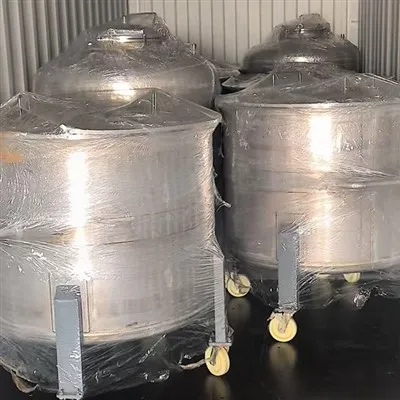
Hey there! I’m a supplier of PMMA Mixed Tanks, and I know how important it is to have top – notch mixing efficiency. In this blog, I’m gonna share some tips on how to improve the mixing efficiency of a PMMA Mixed Tank. PMMA Mixed Tank
Understanding PMMA and the Need for Good Mixing
First off, let’s talk a bit about PMMA. PMMA, or polymethyl methacrylate, is a widely used thermoplastic. It’s known for its high transparency, weather resistance, and good mechanical properties. In many applications, like making acrylic sheets, lighting fixtures, and automotive parts, a well – mixed PMMA mixture is crucial. If the mixing isn’t right, you can end up with uneven properties in the final product, like inconsistent color, strength, or clarity.
Factors Affecting Mixing Efficiency
There are several factors that can impact the mixing efficiency of a PMMA Mixed Tank.
1. Agitator Design
The agitator is like the heart of the mixing tank. Its design plays a huge role in how well the PMMA gets mixed. There are different types of agitators, such as propellers, turbines, and paddles. Propeller agitators are great for low – viscosity fluids. They create a strong axial flow, pushing the liquid up and down in the tank. Turbine agitators, on the other hand, are better for medium – to high – viscosity fluids. They generate a radial flow, which helps in shearing and dispersing the particles.
When choosing an agitator, you gotta consider the viscosity of the PMMA mixture, the size of the tank, and the desired mixing time. If the agitator blades are too small or the wrong shape, they won’t be able to move the fluid effectively, leading to poor mixing.
2. Tank Geometry
The shape and size of the tank also matter. A tall and narrow tank might require a different agitation strategy compared to a short and wide one. In a tall tank, the fluid at the bottom might not get mixed as well as the fluid at the top. To fix this, you can use multiple agitators at different heights or a special type of agitator that can create a more uniform flow throughout the tank.
The position of the inlet and outlet ports also affects mixing. If the inlet is too close to the outlet, the fresh PMMA mixture might just flow straight through without getting properly mixed. So, it’s important to design the tank with the inlet and outlet in the right places.
3. Viscosity of the PMMA Mixture
PMMA mixtures can have different viscosities depending on the formulation and processing conditions. High – viscosity mixtures are more difficult to mix compared to low – viscosity ones. As the viscosity increases, the resistance to flow also increases, making it harder for the agitator to move the fluid around.
To deal with high – viscosity PMMA mixtures, you can heat the mixture to reduce its viscosity. However, you have to be careful not to overheat the PMMA, as it can degrade at high temperatures. Another option is to use a more powerful agitator or increase the agitation speed.
4. Mixing Time
The amount of time you spend mixing the PMMA is also crucial. If you mix it for too short a time, the mixture won’t be homogeneous. But if you mix it for too long, it can lead to over – mixing, which can cause degradation of the PMMA and waste energy.
You need to find the optimal mixing time based on the tank size, agitator design, and the properties of the PMMA mixture. You can do some trials to determine the right mixing time for your specific application.
Tips to Improve Mixing Efficiency
1. Upgrade Your Agitator
If you’re still using an old – fashioned agitator that’s not working well, it might be time for an upgrade. Consider getting an agitator that’s specifically designed for PMMA mixing. Look for features like adjustable speed, different blade configurations, and high – torque motors.
Modern agitators can also come with advanced control systems. You can set the mixing speed, time, and even the direction of rotation. This allows you to fine – tune the mixing process and get better results.
2. Optimize Tank Design
Work with a professional engineer to optimize the design of your PMMA Mixed Tank. They can help you choose the right tank shape, size, and the position of the inlet and outlet ports. You might also want to add baffles inside the tank. Baffles are vertical plates that disrupt the flow pattern and prevent the formation of a swirling motion. This helps to improve the mixing efficiency by creating more turbulence.
3. Control the Viscosity
As I mentioned earlier, viscosity can have a big impact on mixing. You can use temperature control to manage the viscosity of the PMMA mixture. Install a heating or cooling system in the tank to keep the temperature within the desired range. You can also adjust the formulation of the PMMA to change its viscosity. For example, adding a plasticizer can reduce the viscosity.
4. Monitor and Adjust the Mixing Process
Use sensors to monitor the mixing process. You can measure parameters like temperature, viscosity, and pressure. This data can help you make real – time adjustments to the mixing process. For example, if the temperature is getting too high, you can reduce the heating or increase the cooling. If the viscosity is too high, you can increase the agitation speed.
The Benefits of Improving Mixing Efficiency
Improving the mixing efficiency of your PMMA Mixed Tank has several benefits. Firstly, it leads to a higher – quality final product. A well – mixed PMMA mixture means that the properties of the final product, such as color, strength, and clarity, are more consistent. This can increase customer satisfaction and reduce the number of defective products.
Secondly, it can save you money. By using the right agitation and mixing techniques, you can reduce the mixing time and energy consumption. This means lower operating costs in the long run.
Thirdly, it can increase your production capacity. With better mixing efficiency, you can produce more high – quality PMMA products in less time. This gives you a competitive edge in the market.
Time to Step Up Your PMMA Mixing Game
If you’re facing issues with the mixing efficiency of your PMMA Mixed Tank, don’t worry. There are plenty of things you can do to improve it. Whether it’s upgrading your agitator, optimizing the tank design, controlling the viscosity, or monitoring the mixing process, each step can make a big difference.
PMMA Cracking Furnace I’m here to help. As a supplier of PMMA Mixed Tanks, I’ve seen firsthand how these improvements can transform the mixing process. If you’re interested in discussing how we can enhance the mixing efficiency of your PMMA tank, I’d love to have a chat. Reach out to me to start a conversation about how we can work together to take your PMMA production to the next level.
References
- Smith, J. (2018). "Advanced Mixing Techniques for Thermoplastics". Polymer Processing Journal.
- Johnson, A. (2019). "Tank Design Considerations for Efficient Mixing". Chemical Engineering Magazine.
- Brown, C. (2020). "Viscosity Control in Polymer Mixing". Plastics Technology Review.
Wuxi Quansheng Industrial Equipment Co., Ltd.
As one of the most professional PMMA mixed tank manufacturers and suppliers in China, we have world-leading production equipment and strong manufacturing capabilities. Welcome to buy high quality PMMA mixed tank for sale here from our factory. For price consultation, contact us.
Address: No.10, Fulaiqiao Road, Hudai Town, Binhu District, Wuxi City, Jiangsu Province, China
E-mail: 397293586@qq.com
WebSite: https://www.pmmatech.com/
