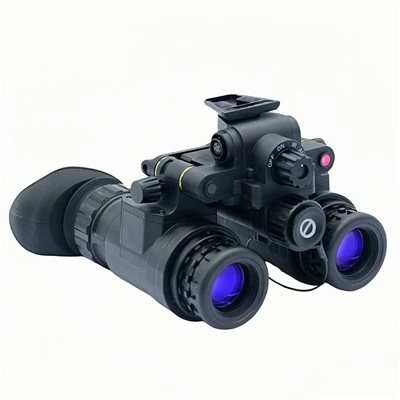
Night vision goggles have long been a staple in military operations, wildlife observation, and security applications. One common question that often arises is how these devices perform in moonlight. As a supplier of high – quality night vision goggles, I’ve had numerous customers inquire about this very topic. In this blog, I’ll delve into the science behind night vision goggles and their performance under the illumination of the moon. Night Vision Goggles
Understanding Night Vision Technology
Before we discuss how night vision goggles perform in moonlight, it’s essential to understand the basic principles of night vision technology. There are two primary types of night vision goggles: image intensification (I²) and thermal imaging.
Image intensification works by collecting the small amounts of light present in the environment, such as starlight or moonlight, and amplifying it to create a visible image. These devices use a photocathode to convert photons into electrons, which are then accelerated and multiplied in a microchannel plate. The intensified electrons are then converted back into photons on a phosphor screen, creating a green – tinted image that the user can view.
Thermal imaging, on the other hand, detects the infrared radiation emitted by objects based on their temperature. It doesn’t rely on visible light sources like moonlight; instead, it creates an image based on the heat signatures of objects in the scene. However, for the purpose of this discussion, we’ll focus mainly on image – intensifying night vision goggles since they are directly affected by moonlight.
The Role of Moonlight in Night Vision
Moonlight is a significant source of ambient light at night. The amount of light provided by the moon varies depending on its phase. A full moon can provide up to 0.25 lux of illumination on a cloud – free night, while a crescent moon may provide only 0.001 lux. For comparison, a well – lit office typically has an illumination level of around 500 lux.
The performance of image – intensifying night vision goggles is directly related to the amount of available light. In general, the more light there is, the better the goggles will perform. When there is sufficient moonlight, the goggles can collect enough photons to create a clear and detailed image.
Performance in Different Moon Phases
Full Moon
During a full moon, night vision goggles can perform exceptionally well. The relatively high level of illumination allows the goggles to capture a large number of photons, resulting in a bright and sharp image. Objects at a greater distance can be easily identified, and fine details such as the texture of leaves or the markings on an animal’s fur can be discerned.
In military applications, soldiers can use night vision goggles under a full moon to conduct reconnaissance missions with greater ease. They can detect enemy movements from a distance and navigate through unfamiliar terrain more safely. For wildlife enthusiasts, a full – moon night is an ideal time to observe nocturnal animals. The enhanced visibility provided by the goggles allows for better identification and study of the animals’ behavior.
Gibbous Moon
A gibbous moon, which is more than half – illuminated but not quite full, also provides a significant amount of light. Night vision goggles can still perform well during this phase, although the image may be slightly less bright compared to a full – moon night. The reduced light level may make it a bit more challenging to detect very small or distant objects, but overall, the goggles can still offer a useful view of the surroundings.
Quarter Moon
When the moon is in its first or third quarter, the illumination level drops significantly. The available light is about one – tenth of that during a full moon. As a result, the performance of night vision goggles is somewhat degraded. The image may appear darker, and the range of visibility is reduced. However, with high – quality goggles, it is still possible to make out general shapes and movements.
Crescent Moon
A crescent moon provides only a very small amount of light. In this situation, the performance of night vision goggles is severely limited. The image may be quite dim, and it can be difficult to distinguish fine details. The goggles may struggle to pick up objects at a distance, and the overall visual field may be restricted.
Factors Affecting Performance in Moonlight
Apart from the moon phase, several other factors can affect how night vision goggles perform in moonlight.
Weather Conditions
Cloud cover can significantly reduce the amount of moonlight reaching the ground. Even a thin layer of clouds can block a large portion of the light, making the environment darker and reducing the effectiveness of the goggles. Fog, mist, and rain can also scatter the available light, further degrading the image quality.
Light Pollution
In urban or suburban areas, light pollution from streetlights, buildings, and other sources can interfere with the performance of night vision goggles. The artificial light can overwhelm the small amount of moonlight, making it difficult for the goggles to amplify the natural light effectively. This can result in a washed – out image and reduced contrast.
Goggles’ Generation and Quality
The generation and quality of the night vision goggles play a crucial role in their performance. Higher – generation goggles, such as Gen 3 and Gen 4, are generally more sensitive to light and can provide better image quality in low – light conditions. They have a higher signal – to – noise ratio, which means they can amplify the light more effectively while minimizing background noise.
Real – World Applications and Performance
In real – world scenarios, the performance of night vision goggles in moonlight can vary widely depending on the specific application.
Military Operations
In military operations, soldiers often rely on night vision goggles to gain a tactical advantage. During a full – moon night, they can use the goggles to conduct long – range surveillance and engage in stealthy maneuvers. However, in situations where the moon is in a less – illuminated phase or when there are adverse weather conditions, the soldiers may need to rely on additional light sources or thermal imaging devices.
Wildlife Observation
Wildlife observers use night vision goggles to study nocturnal animals without disturbing them. On a full – moon night, they can observe animals at a greater distance and for a longer time. The clear image provided by the goggles allows them to document the animals’ behavior in detail. In contrast, during a crescent – moon night, the observers may need to get closer to the animals to get a good view, which can be more challenging and may increase the risk of disturbing the animals.
Security and Surveillance
Security personnel use night vision goggles to monitor large areas at night. In areas with a good amount of moonlight, the goggles can help them detect intruders from a distance. However, in areas with light pollution or poor moon illumination, they may need to install additional lighting systems or use thermal cameras to supplement the night vision goggles.
Conclusion
In conclusion, the performance of night vision goggles in moonlight is highly dependent on the moon phase, weather conditions, light pollution, and the quality of the goggles themselves. While they can perform exceptionally well under a full moon, their effectiveness decreases as the moon becomes less illuminated.
As a supplier of night vision goggles, I understand the importance of providing our customers with products that can deliver optimal performance in various conditions. Whether you’re a military professional, a wildlife enthusiast, or a security officer, choosing the right night vision goggles is crucial.
Night Vision Scopes If you’re interested in learning more about our night vision goggles or would like to discuss your specific requirements, please feel free to contact us. We’re here to help you find the perfect solution for your night – time needs.
References
- "Night Vision and Thermal Imaging Handbook" by Afzal S. Khan
- "Fundamentals of Night Vision Technology" by the United States Army Research Laboratory
- Scientific articles on night – time illumination and optics from peer – reviewed journals.
Shenzhen Detyl Optoelectronics Co., Ltd.
With abundant experience, we are one of the most professional night vision goggles manufacturers and suppliers in China. Please rest assured to buy customized night vision goggles at competitive price from our factory. For pricelist and quotation, contact us now.
Address: 4th Floor, Building 3, Factory, No. 20, Second Industrial Avenue, Tangxiayong Community, Yanluo Street, Bao’an District, Shenzhen
E-mail: sales@detyl.com
WebSite: https://www.detyl.net/
