Hey there, it’s Jake from [Your Company Name], and today we’re diving into a question I get at least twice a week from clients working in places that feel like they’re in a constant battle with rust, salt, and weird chemical fumes: “Can a diesel generator actually hold up in a corrosive environment?” Diesel Generator
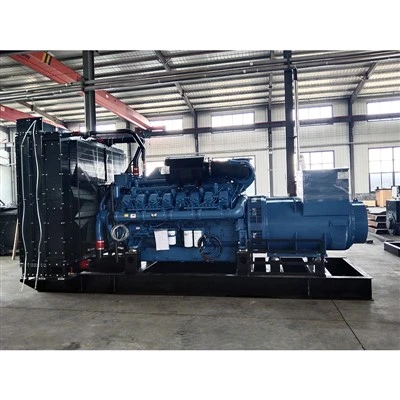
If you’re in an industry that deals with this stuff—think coastal power plants, chemical manufacturing facilities, offshore drilling rigs, or even food processing plants where that cleaning stuff gets kicked up nonstop—you know corrosive environments don’t play around. Last year, we had a client out in Florida’s Keys, right by the Gulf, who tried a cheap, off-brand generator for his backup power at his bait and tackle warehouse. Six months in, the unit’s steel frame was so pitted you could run your nail along it and catch, and the fuel lines were leaking so bad it almost took out his whole inventory during a storm. That’s the kind of story that sticks with me, because it’s avoidable.
First off, let’s get one thing straight: standard diesel generators? They’re basically tin cans with a motor inside. They’re built for a warehouse or a job site where the worst you deal with is a little dust or rain. Put that same unit in a place where the air’s thick with saltwater mist, or there’s ammonia fumes from fertilizer, or the air’s got high levels of sulfur from chemical plant exhaust? The metal parts don’t stand a chance. Corrosion doesn’t just look bad— it eats through engine components, clogs fuel filters, and messes with electrical connections. Before you know it, your generator’s sitting there when you need it most… and it’s dead.
But wait— that doesn’t mean you can’t have a diesel generator that works in these environments. The key is building (or upgrading) the unit to fight back against corrosion. Let’s break down what actually makes a generator corrosion-resistant, because it’s not just slapping a coat of paint on it.
First, the materials. Standard generators use plain carbon steel for frames, aluminum for some parts, and basic steel for fuel tanks. Swap those out, and you’re halfway there. We use hot-dip galvanized steel for our generator skids and enclosures— that process dips the steel into molten zinc, so every nook and cranny gets a protective layer. Unlike regular paint, that zinc doesn’t chip off if a tool falls on it or something brushes up against it. For parts that sit inside the engine bay, like valve covers or bracket mounts, we go with stainless steel— the 316 grade, not the cheap 304 stuff that rusts fast in salt air. 316 has molybdenum in it, which is like a superpower against chloride (that’s the bad stuff in saltwater) corrosion. Even the fuel lines aren’t left out— we use coated seamless steel lines instead of plain ones, because rubber hoses break down fast in chemical fumes.
Then there’s the enclosure. If your generator’s exposed, that’s half the battle lost. A lot of people think “corrosive environment” just means outside, but even inside a warehouse where they clean with acid-based products, the mist hangs in the air. We build our corrosion-ready enclosures with sealed panels, gaskets on every door and port, and even corrosion-resistant coating on the inside of the enclosure. Wait, why inside too? Because fumes seep in over time, right? If you just coat the outside, the inside metal rusts and eats away at the electrical connections and wiring harness. We also add corrosion inhibitors to the engine coolant and fuel system— that stuff’s not optional in these environments, trust me. Last month we had a client from a fertilizer plant who skipped the inhibitor, and his generator’s radiator developed a pinhole leak in 8 months. Replacement cost? $4,000. That’s a mistake no one needs to make.
But here’s the part most suppliers won’t tell you— it’s not just the parts you put on the generator, it’s how you maintain it. Corrosion resistance isn’t a set-it-and-forget-it thing. When we sell a generator for a corrosive environment, we don’t just hand over the keys and disappear. We send our maintenance techs out every 3 months to do a deep clean— not just wiping down the outside, but checking for hidden corrosion in the frame, testing the coolant’s inhibitor level, and tightening any loose connections that could let moisture in. We also teach our clients’ teams how to spot early signs of corrosion: a faint rust spot on the frame, a change in the engine’s exhaust color, even a slight increase in fuel consumption. Catching that stuff early saves you from a $20,000 repair down the line.
Wait, let’s talk about real-world examples, because numbers don’t lie. That Florida Keys client I mentioned earlier? He came to us last year, bought one of our corrosion-resistant units. He’s had it for 12 months now, sends us photos every quarter— no pitting, no leaks, runs like a top. The offshore drilling rig we supplied for in the Gulf of Mexico? Their old generator would need a full paint job every 6 months, and engine work every year. Ours has been out there for 2 years, and the only maintenance they’ve needed is the quarterly coolant flush and filter change. That’s the difference between a standard generator and one built for corrosion.
I know what some of you are thinking: “This sounds expensive. Way more than a standard generator.” Yeah, upfront cost is higher, but let’s do the math. A standard generator for coastal use might cost you $10,000, and you’ll need to replace it every 3 years. A corrosion-ready one from us? $18,000, and it will last 10+ years. Plus, no emergency downtime. If your generator dies during a storm or a plant shutdown, that’s thousands an hour in lost revenue. I had a food processing client last year whose cheap generator died during a 10-hour power outage— they lost $120,000 in spoiled inventory. That’s way more than the extra cost of a good corrosion-resistant unit.
There are also mistakes we see people make that end up costing them. For example, some guys will buy a standard generator and add a $500 rust spray to it, thinking that’s enough. Nope— that spray will wear off in 6 months, and you’re back to square one. Or they’ll put the generator in a covered space but not seal it, so moisture and fumes still get in. Another big one: using the wrong fuel. If you’re in a corrosive environment, you can’t just buy regular diesel. We recommend low-sulfur diesel with a biocidal additive— the stuff with high sulfur breaks down faster and causes more corrosion.
At the end of the day, the answer to “Can a diesel generator be used in a corrosive environment?” is a resounding yes— but only if it’s built right. You can’t cut corners on materials, you can’t skip the protective coatings, and you can’t ignore regular maintenance. That’s why we don’t sell one-size-fits-all generators. When a client comes to us and says they need a unit for a saltwater environment vs. a chemical plant vs. a food processing facility, we customize every part to their exact needs. We don’t believe in selling a generator that will fail in 2 years just to make a quick buck.

If you’re dealing with a corrosive environment and tired of replacing generators every few years, or you’re worried about backup power failing when you need it most, hit us up to chat. We’ll walk you through the options, give you a free, no-obligation quote, and even share some real client stories to back it up. No salesy jargon, just straight talk from a guy who’s been in the diesel generator game for 15 years and has seen every corrosion-related mess out there. Don’t let your power supply be the next casualty of your harsh work environment.
Silent Type Generator Set References:
- Corrosion Resistance in Industrial Generators, National Association of Corrosion Engineers (NACE) International, 2022
- Guidelines for Diesel Generator Selection in Coastal Environments, American Petroleum Institute (API) Publication 541, 2021
- Material Selection for Corrosion-Prone Power Generation Equipment, International Organization for Standardization (ISO) 12944, 2020
- Field Study of Generator Durability in Chemical Manufacturing Facilities, Electrical Construction & Maintenance (EC&M) Magazine, Volume 40, Issue 8, 2023
Weifang Bofa Power Equipment Co., Ltd.
We’re well-known as one of the best diesel generator suppliers in China. With a professional production team, we are able to meet the needs of the majority of our customers. Please feel free to buy cheap diesel generator for sale here from our factory. For price consultation, contact us.
Address: Lianhuachi Village, Fangcheng Street Office, Fangzi District, Weifang City, Shandong Province.
E-mail: sales@wfbofapower.com
WebSite: https://www.wfbfgenset.com/
