A few months back, I got a panicked call from a small clinic in rural Ohio that had just lost its main power during a summer thunderstorm. The nurse on the line was hyperventilating as she explained they’d had to put a premature infant in a temporary incubator powered by a car battery, which was already dying. By the time I walked through their door with a portable diesel generator that afternoon, that baby had been stable for two hours—but that incident made me stop and think: How often do people in positions of trust (like clinic managers, clinic directors, even family members) assume that hospital power reliability is non-negotiable, when the truth is that even modern healthcare facilities face grid failures that can turn life-saving equipment into paperweights? As a household diesel generator supplier, I’ve spent 12 years walking customers through every edge case of backup power, and today I want to answer the question that keeps popping up in my inbox: Can a household diesel generator be used in a hospital? The short answer is: Yes—but only if you get the right generator, install it correctly, and follow strict maintenance protocols. The longer answer? It’s not a one-size-fits-all “yes” or “no”; it’s a series of decisions that balance patient safety, regulatory compliance, and practicality that most small hospitals and clinics need to get right. Household Diesel Generator
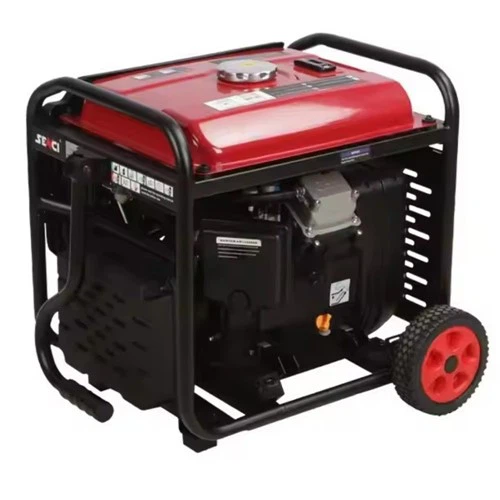
First, let’s cut through the common misconception that only industrial-grade generators (the ones that weigh 10,000 pounds and cost six figures) are suitable for healthcare settings. Most small, community hospitals and rural clinics I work with—facilities with 25 to 150 beds—operate on a fraction of the power draw of a city hospital or a large urban hospital. Let’s break down what a typical small hospital’s critical loads actually are, because that’s the only part that matters when choosing backup power. Critical loads are the systems that can’t fail for more than 10 seconds during a grid outage, because losing power to them means a patient will die or suffer permanent harm. For most small hospitals, that list includes: emergency department equipment (defibrillators, patient monitors, IV pumps), operating rooms for emergency procedures, intensive care unit (ICU) life support ventilators, incubators for neonatal care, refrigeration for vaccines and blood products, and basic lighting for hallways, stairwells, and emergency exits. Non-critical loads, like the cafeteria, admin offices, or patient TVs, can wait until grid power is restored. Now, let’s do the math on power needs for a 50-bed rural hospital. A standard ICU ventilator uses roughly 1.2 to 2 kWh per hour; a neonatal incubator uses 0.5 to 1 kWh; a full set of five patient monitors and IV pumps uses 3 kWh; vaccine refrigeration uses 2 kWh; and emergency lighting adds another 1 kWh. Add that all up, and you’re looking at around 10 kWh for core critical loads. That’s not even close to the 200+ kWh that a large urban hospital uses. So a lot of the household diesel generators I supply—models that range from 12 kVA to 30 kVA (which translates to roughly 9.6 kW to 24 kW of continuous power) —are more than capable of handling that load. But here’s the catch: A generator that works for your garage isn’t the same as one that works for a clinic. When I explain this to customers, I always break down the two biggest non-negotiables for healthcare use: reliability and compliance.
Reliability is the number one priority, and it’s why I push specific household models that I’ve tested and refined for this exact use case. Most standard household diesel generators are designed for occasional, short outages—say, 4 to 8 hours when a tree falls on a power line. But healthcare facilities can face multi-day outages, especially in rural areas where grid repairs take longer, or during extreme weather like the 2022 winter storm in Texas that left millions without power for days. The generators I supply for these applications have industrial-grade fuel filters, high-flow cooling systems, and a corrosion-resistant frame that can handle outdoor placement in all weather, which is standard for generators rated for 24/7 use. I also always add a transfer switch as part of the package, and this is where so many people go wrong. A manual transfer switch is fine for a single-family home—you plug a heavy-duty cord into your dryer outlet, flip a switch, and power your fridge. But for a hospital, that’s a death sentence. A manual switch means there’s a 30-second gap between grid power failure and generator startup—enough time for a ventilator to shut down, or a premature infant’s temperature to drop to dangerous levels. That’s why automatic transfer switches (ATS) are mandatory for any healthcare backup system. The ATS constantly monitors grid power; if it detects a fault (even a blip that lasts less than a second, which can damage sensitive medical equipment), it signals the generator to start automatically, and the entire switchover takes less than 10 milliseconds. That’s fast enough to keep any critical load running without interruption. I work with a licensed electrician in every area I service to install these ATS units, because miswiring them can create reverse power flow that kills line workers during grid repairs, which is a huge safety hazard.
The second non-negotiable is compliance, and this is where a lot of people get tripped up because they assume “household” means it’s too cheap or too unregulated for healthcare. But let’s clarify: When I say “household diesel generator,” I don’t mean the cheap model you can find at a big-box store that’s rated for 5 hours of continuous use before it overheats. I mean generators that meet NFPA 110 standards, which is the National Fire Protection Association’s standard for emergency and standby power systems. NFPA 110 splits standby power systems into two classes: Level 1, which is for facilities where power loss could cause loss of life (like hospitals), and Level 2, which is for things like office buildings or retail stores. The household models I supply for healthcare use are all Level 1 rated, which means they have to meet strict requirements for startup time, load testing, and fuel supply. NFPA 110 requires that Level 1 generators start within 10 seconds of a grid outage, which is exactly what we built our automatic systems to do. They also require that generators have a fuel supply that can run the critical loads for at least 2 hours, and most models I sell come with optional 500-gallon above-ground fuel tanks that can run full critical loads for 24 to 48 hours, and we can arrange for periodic fuel deliveries if an outage lasts longer. Another common question I get is about emissions, because diesel generators get a bad rap for being polluting, and many people assume hospitals can’t use them. But modern diesel generators—even the compact, household-style models I supply—meet EPA Tier 4 Final emissions standards, which are the strictest in the U.S. These generators use a diesel particulate filter (DPF) and selective catalytic reduction (SCR) technology to cut emissions by 90% compared to older models. That means they’re not only safe for use near a clinic or hospital (as long as they’re installed 10 feet away from windows and intake vents, per local code) but they also meet most municipal emissions rules. I’ve had customers in suburban areas install these generators right next to their clinic, and local health departments have approved them without pushback.
Of course, there are limits, and I always make sure customers understand those before they make a purchase. A standard household diesel generator can’t power every part of a large, 500-bed urban hospital—those still need industrial generators. And even for small facilities, you have to do a load calculation that’s specific to your equipment. I once had a customer who tried to skip the load calculation step and bought a 12 kVA generator for a 50-bed clinic, only to realize it couldn’t run both the ICU ventilator and the vaccine fridge at the same time. The problem was that some medical equipment has a “surge load”—the amount of power it needs to start up, which is 3 to 5 times the running load. A ventilator’s running load is 1.2 kWh, but its surge load is 4 kWh, so if you don’t account for that, your generator will shut down when you start a second piece of equipment. That’s why I always offer a free load assessment as part of my service: I’ll visit your facility, map out every critical piece of equipment, calculate surge loads, and recommend exactly which generator size you need, no guesswork. Another limit is maintenance. A generator is only as good as its last service, and household generators for healthcare need regular, professional maintenance, just like the ones in industrial facilities. NFPA 110 requires monthly load testing, annual oil and filter changes, and quarterly full-load tests every three years. I offer a maintenance plan that’s designed specifically for healthcare generators, so you don’t have to remember to call someone—we’ll send a technician to your clinic every month to run a load test, check fuel levels, and make sure the generator is ready to go at a moment’s notice. A few years ago, a clinic in rural Kentucky called me after a big storm that knocked out power for 3 days. Their old generator, which they’d bought secondhand from a hardware store, had failed to start because they’d never changed the fuel filter and the old diesel had gelled up. That clinic was forced to transfer two patients to a hospital 2 hours away in the middle of a tornado warning, and it was a nightmare for the staff and the patients’ families. That’s the kind of mistake I help customers avoid by building maintenance into every package.
I also want to address a question I get from worried family members of patients: Is a diesel generator safe to have near a hospital? The short answer is yes, if it’s installed correctly. As I mentioned earlier, EPA Tier 4 Final generators emit almost no harmful pollutants, and local codes require generators to be installed with exhaust vents that direct fumes away from building intakes. I always work with electricians and HVAC technicians to make sure the installation meets all local and national codes, so there’s no risk of carbon monoxide or other pollutants entering the facility. I’ve also installed generators at clinics that are located next to residential neighborhoods, and I’ve never had a complaint from a neighbor about noise, because the generators have sound-dampening enclosures that cut noise levels to less than 60 decibels—about as loud as a normal conversation.
Now, let’s talk about real-world examples, because numbers and standards mean nothing if they don’t work in practice. Last summer, a 30-bed clinic in northern Michigan called me when a heat dome left their area without power for 18 hours. Their regular power went out at 2 a.m., and by 2:10 a.m., our automatic generator had kicked on, powering their neonatal incubators, their emergency department, and their vaccine fridge. The nurse on duty told me later that the only time the power flickered was when the local grocery store’s generator tried to connect to the same grid, and our system automatically adjusted its load to compensate. They’d lost power twice in the last two years, and both times, our generator kept their facility running without any interruptions. Another example: a small urgent care center in suburban Chicago that used to rely on portable gas generators during outages. Gas generators are fine for occasional use, but they’re not designed for multi-day runs—gas goes bad in 30 days, and they’re less reliable in cold weather. They switched to a 20 kVA household diesel generator from my line two years ago, and last winter, when a blizzard left them without power for 40 hours, the generator ran nonstop, powering their patient monitors and IV pumps the entire time. The clinic manager told me that before they got the diesel generator, they’d had to turn away urgent patients during outages because their equipment wouldn’t work, but now they can serve the whole community, no matter what.

I get it—when you hear “household diesel generator,” you might picture a big, clunky machine for your backyard, not a life-saving tool for a hospital. But over 12 years in this industry, I’ve seen that the most important thing about backup power for healthcare is reliability, not size. A well-chosen, properly installed, and regularly maintained household diesel generator can be more than enough for small hospitals and clinics, and it’s a lot more affordable than an industrial generator. The key is to work with a supplier who understands the unique needs of healthcare facilities, not just residential customers. That’s where I come in. For any facility manager, clinic director, or healthcare administrator who’s worried about grid reliability, I offer free consultations to assess your needs, recommend the right generator, handle installation, and set up a maintenance plan that keeps your system ready when you need it. I’ve worked with hundreds of healthcare facilities across the country, and I know that every second of backup power can mean the difference between life and death. If you’re tired of worrying about what happens when the grid goes down, or if you need to upgrade your current backup system to meet safety standards, reach out to connect for a procurement discussion.
Household Diesel Generator References:
- National Fire Protection Association. (2022). NFPA 110: Standard for Emergency and Standby Power Systems. Quincy, MA: NFPA.
- U.S. Environmental Protection Agency. (2023). Tier 4 Final Emission Standards for Nonroad Diesel Engines. Washington, D.C.: EPA Office of Transportation and Air Quality.
- American Hospital Association. (2021). Rural Healthcare Backup Power: A Guide for Small and Critical Access Hospitals. Chicago, IL: American Hospital Association.
- World Health Organization. (2020). Backup Power for Health Care Facilities During Outbreaks and Disasters. Geneva, Switzerland: WHO Press.
Dianbida Power Equipment (Jiangsu) Co., Ltd.
We’re well-known as one of the leading household diesel generator manufacturers and suppliers in China. We warmly welcome you to buy advanced household diesel generator at competitive price from our factory. If you have any enquiry about pricelist and quotation, please feel free to email us.
Address: No. 23, Nanhuan Road, Jiangdu District, Yangzhou City, Jiangsu Province
E-mail: 19962469616@163.com
WebSite: https://www.js-dbdpower.com/
