If you’ve ever worked with advanced ceramics, semiconductor manufacturing, lithium-ion batteries, or LED lighting, you’ve likely encountered high-purity alumina (HPA) — a material that’s as critical to modern tech as silicon itself. But as someone who’s spent the past decade sourcing, testing, and supplying HPA to industries around the world, I still get asked one question more than any other: “What do those ‘purity levels’ even mean, and why do they matter?” It’s a fair question, too. Purity isn’t just a random number here; it’s the difference between a component that powers a cutting-edge electric vehicle and one that fails mid-drive, or a semiconductor wafer that enables a supercomputer and one that produces costly defects. High-purity Alumina
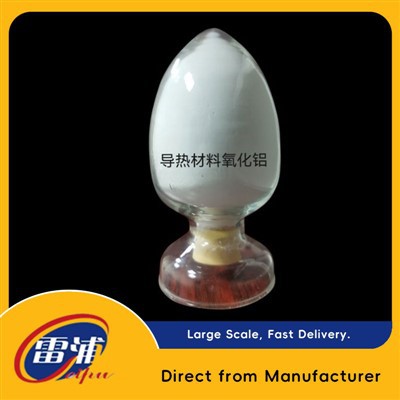
Let’s start with the basics. Alumina — aluminum oxide, or Al₂O₃ — is a ceramic material made by refining bauxite ore. But for most applications that rely on HPA, we’re not talking about the standard-grade alumina used in spark plugs or abrasive pads. That stuff is often 95% to 98% pure, with impurities like iron, silicon, and sodium making up the remaining 2% to 5%. HPA, by contrast, is refined to remove almost all of those contaminants, and its purity levels are categorized by how much leftover impurity is allowed — typically measured in parts per million (ppm) of total trace elements, sometimes even parts per billion (ppb) for the strictest applications.
Over the years, I’ve worked with clients who come to us confused about which purity they need, and how a small difference in numbers can sink a project. For example, a semiconductor manufacturer might insist on 99.999% purity (called “five-nines” or 5N) because even 10 ppm of sodium can corrupt the silicon wafer’s thin transistor layers, ruining millions of dollars in product. On the flip side, a client making lithium-ion battery separators might need 99.9% (three-nines or 3N) HPA, a level that’s still far higher than standard alumina but doesn’t require the extreme filtration needed for semiconductors.
Let’s break down the most common purity tiers, as I’ve come to define them through hands-on work in the supply chain, and what each is used for.
First, there’s 3N (99.9% pure). This is the entry point for HPA, and it’s not just a fancy upgrade from standard alumina. Impurities here are limited to 1,000 ppm total — so only 0.1% of the material is trace elements. For many industrial applications, that’s enough. I’ve supplied 3N HPA to companies producing thermal interface materials for power electronics, where the alumina acts as a heat conductor without interfering with the device’s electrical performance. It’s also used in some specialty ceramics for industrial tools, where durability is key, and minor impurities won’t cause failure. Back when I first started in this business, 3N was the only HPA we offered, and it’s still our best-seller for clients who need consistent quality without the high cost of extra purification steps.
Next up is 4N (99.99% pure). Here, total trace impurities drop to 100 ppm — a 10x reduction from 3N. This is where HPA starts moving into high-stakes tech. I see 4N HPA go into LED manufacturing, specifically for the phosphor coatings that turn blue LED light into white light. If there’s too much iron or copper in the alumina, it can absorb light and reduce the LED’s brightness, or even cause color shifting that makes products unsellable. We also supply 4N to makers of lithium-ion battery cathode coatings, where it acts as a protective layer to prevent the cathode from degrading during charging cycles. A few years ago, we had a client making EV batteries switch to 4N from 3N after they noticed a 12% drop in cycle life; the impurity levels in the 3N alumina were causing tiny cracks in the cathode over time. That’s the kind of real-world impact purity levels have — not just numbers on a spec sheet, but tangible performance.
Then comes 5N (99.999% pure) and 6N (99.9999% pure), which are where things get really specialized. Total impurities here are 10 ppm and 1 ppm, respectively. These are the HPA grades that go into semiconductor manufacturing, specifically as a base material for epitaxial wafers and as a dielectric layer in microchips. I’ve visited a semiconductor fabrication plant in Taiwan a few years back, and their quality team told me that even 1 ppm of sodium in HPA can cause “sodium poisoning” in transistors, leading to 30% of wafers being scrapped during production. That’s why they require 6N HPA — they only accept parts per billion of impurities, sometimes even testing for individual elements like lead or arsenic at the ppb level. We also supply 5N and 6N to companies making high-temperature ceramics for aerospace, where components have to survive extreme heat and thermal shock without breaking down. I once worked with a space tech client who had to qualify our 6N HPA for a satellite component; it took 18 months of testing, but once they did, they became a repeat customer who still reaches out for every batch.
It’s important to note that purity levels aren’t just about the total amount of impurities — it’s also about which elements are present. For example, a 5N HPA might have 10 ppm of total impurities, but if 9 of those 10 ppm are harmless aluminum, and the remaining 1 ppm is iron, that’s different from having 5 ppm sodium and 5 ppm silicon. Sodium is far more damaging in semiconductors than iron, so even a material with slightly higher total impurities but lower of the harmful elements can be more useful for a given application. That’s why as a supplier, we don’t just test for total trace elements — we run elemental analysis for over 20 common contaminants, including iron, silicon, sodium, potassium, lead, and arsenic, and provide a detailed spec sheet for every batch.
Another thing I’ve learned over the years: there’s a common misconception that “higher purity is always better.” It’s not. For a client making low-cost industrial ceramics, paying extra for 6N HPA would be a waste of money, not an improvement. I once had a small startup reach out to me asking for 6N HPA to make phone case materials. They thought higher purity meant better quality, but when I explained that 3N would give them all the heat resistance and durability they needed, they saved 40% on their material costs and still got a product that exceeded their customers’ expectations. Good suppliers don’t just sell the highest purity — we help clients find the right purity for their specific application, balancing performance and cost.
So how is HPA purified to reach these levels? The process has evolved a lot since I started. Early on, most HPA was made via the Bayer process, the same method used for standard alumina, but with extra steps to filter out impurities. These days, we use two main methods: the Sol-Gel process and the Ammonium Aluminum Sulfate (AAS) decomposition process. Sol-Gel starts with a chemical solution that forms a gel, which is then dried and calcined at high temperatures to remove impurities. AAS involves dissolving alumina into ammonium aluminum sulfate crystals, which are then broken down to release pure alumina, with most contaminants left behind in the solution. Both methods let us control purity down to the ppm or ppb level, but each has its own tradeoffs in cost and batch size, which is why we work with clients to choose the process that fits their needs.
As the demand for advanced tech grows, the need for HPA is only going up. Last year, I saw a 22% increase in orders for 4N and 5N HPA, driven by the boom in EV batteries and LED lighting projects. Semiconductor demand has been even higher, with many fabs expanding their HPA supply chains to avoid shortages. But with that growth comes more confusion about purity levels, which is why I try to be transparent with every client, no matter how big or small.
If you’re working on a project that requires high-purity alumina, whether it’s a new semiconductor component, an EV battery upgrade, or a specialty ceramic for industrial use, you don’t have to navigate the purity tiers alone. We’ve spent years refining our processes to offer consistent, tested HPA across 3N, 4N, 5N, and 6N levels, and our team can help you determine exactly which purity is right for your application, without overpaying for unnecessary quality.
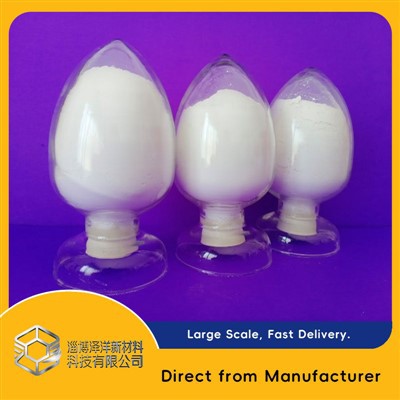
If you’re ready to discuss your HPA needs, reach out to us to talk through your project details, test requirements, and quantity needs. We’re here to provide samples, detailed spec sheets, and personalized guidance to make sure you get the right material for every job.
High-purity Alumina References:
- Technical Report: High-Purity Alumina for Semiconductor Applications, International Union of Pure and Applied Chemistry, 2022.
- Industrial Alumina Processing Handbook, 3rd Edition, Elsevier, 2021.
- Market Analysis of High-Purity Alumina for Lithium-Ion Batteries, Grand View Research, 2023.
Shandong Leipu New Material Technology Co., Ltd.
With abundant experience, we are one of the most professional high-purity alumina manufacturers and suppliers in China. Please feel free to buy high quality high-purity alumina for sale here and get quotation from our factory. For price consultation, contact us.
Address: Advanced Ceramic Industry Innovation Park, No. 125, Liuquan Road, High-tech Zone, Zibo City, Shandong Province
E-mail: 2330389088@qq.com
WebSite: https://www.sdleipu.com/
