Can control cables be used in aerospace applications? Control Cable

As a seasoned supplier of control cables, this is a question I’m frequently asked. Control cables are flexible mechanical devices used to transmit force from one point to another. They consist of an inner cable that moves within an outer casing, which is often made of a protective material to ensure smooth operation and prevent wear and tear. Now, let’s dive into the feasibility of using control cables in aerospace applications.
The Aerospace Requirements
The aerospace industry has some of the most stringent requirements in the world. Components used in aircraft, satellites, and other aerospace vehicles need to meet extremely high standards of reliability, performance, and safety. For instance, they must be able to withstand a wide range of temperatures, from the freezing cold of space to the high – heat generated during re – entry or engine operation. They also need to resist corrosion from various chemicals and environmental factors, such as moisture and radiation.
In addition, aerospace applications demand lightweight components. Every extra kilogram on an aircraft or satellite means increased fuel consumption or reduced payload capacity. Therefore, the materials and designs chosen for aerospace components must be optimized for weight without sacrificing strength or functionality.
Advantages of Control Cables in Aerospace
Precision and Flexibility
One of the key advantages of control cables is their ability to provide precise control. In aerospace applications, even the smallest margin of error can have catastrophic consequences. Control cables can be designed to accurately transmit forces and movements, allowing for precise control of flight control surfaces, landing gear, and other critical systems. For example, in a small aircraft, control cables can connect the pilot’s controls in the cockpit to the ailerons, elevators, and rudder, enabling the pilot to maneuver the aircraft with high precision.
Their flexibility is another significant benefit. Control cables can be routed around obstacles and through complex geometries, which is often necessary in the confined spaces of an aircraft or satellite. This flexibility allows for a more efficient and compact design of the internal systems, optimizing the use of available space.
Reliability
Control cables have a proven track record of reliability. They are simple in design, with relatively few moving parts compared to some other control mechanisms. This simplicity reduces the chances of mechanical failure. Moreover, modern control cables are made from high – quality materials, such as stainless steel or high – strength alloys, which can withstand the harsh conditions of aerospace environments. With proper maintenance and inspection, control cables can last for a long time, providing consistent performance over the lifespan of an aerospace vehicle.
Cost – effectiveness
In comparison to some more advanced control technologies, control cables can be a cost – effective solution for certain aerospace applications. Their relatively simple manufacturing process and the use of well – known materials result in lower production costs. For aerospace projects with budget constraints, control cables can offer a practical alternative without sacrificing too much in terms of performance.
Challenges of Using Control Cables in Aerospace
Weight and Space Constraints
Although control cables are generally lightweight, in aerospace applications, every fraction of a gram counts. The cumulative weight of multiple control cables can become a concern, especially in satellites and small aircraft. Engineers need to carefully optimize the design of control cables, using advanced materials and thinner – gauge wires to reduce weight while maintaining strength.
Space is also a limiting factor. In modern aerospace vehicles, the internal compartments are packed with various systems, leaving little room for control cables. Cable routing must be carefully planned to avoid interference with other components, such as wiring harnesses, hydraulic lines, and avionics systems.
Environmental Resistance
While control cables can be made from corrosion – resistant materials, the extreme conditions in aerospace environments pose a significant challenge. High – altitude flight exposes control cables to low – pressure and low – temperature conditions, which can affect the lubrication and elasticity of the cables. In space, control cables may be subjected to radiation damage, which can weaken the material over time. Additionally, the presence of chemicals and pollutants in the atmosphere can cause corrosion, especially in areas close to engine exhaust.
Maintenance and Inspection
Proper maintenance and inspection of control cables are crucial for their safe operation in aerospace applications. Over time, control cables can experience wear and tear, such as fraying of the inner cable or damage to the outer casing. These issues need to be detected early to prevent failures. However, inspecting control cables in an aerospace vehicle can be difficult, as they are often located in hard – to – reach areas. Specialized tools and techniques are required for thorough inspections, which can add to the maintenance costs and time.
Solutions to Overcome Challenges
Material Innovation
Manufacturers are constantly researching and developing new materials for control cables. For example, the use of carbon fiber – reinforced materials can significantly reduce the weight of control cables while maintaining high strength. These advanced materials also offer better resistance to environmental factors, such as corrosion and radiation. Additionally, new types of lubricants are being developed to ensure smooth operation of control cables in extreme temperatures and low – pressure conditions.
Design Optimization
Advanced design techniques, such as computer – aided design (CAD) and finite element analysis (FEA), are being used to optimize the design of control cables. These tools allow engineers to simulate the performance of control cables under different conditions and make adjustments to the design to reduce weight, improve flexibility, and enhance reliability. For example, by using FEA, engineers can identify areas of stress concentration in a control cable and modify the design to distribute the stress more evenly.
Improved Maintenance Practices
To address the challenges of maintenance and inspection, new technologies are being introduced. For instance, sensors can be integrated into control cables to monitor their condition in real – time. These sensors can detect changes in tension, wear, and other parameters, allowing for early detection of potential problems. Additionally, remote inspection techniques, such as the use of drones or robotic devices, can be used to access hard – to – reach areas and perform inspections more efficiently.
Conclusion
In conclusion, control cables can indeed be used in aerospace applications. They offer several advantages, such as precision, flexibility, reliability, and cost – effectiveness. However, they also face challenges in terms of weight, space, environmental resistance, and maintenance. Through material innovation, design optimization, and improved maintenance practices, these challenges can be overcome.
As a control cable supplier, I am committed to providing high – quality control cables that meet the strict requirements of the aerospace industry. Our team of experts has extensive experience in developing and manufacturing control cables for various aerospace applications. We understand the unique challenges faced by aerospace engineers and are dedicated to working with them to find the best solutions.
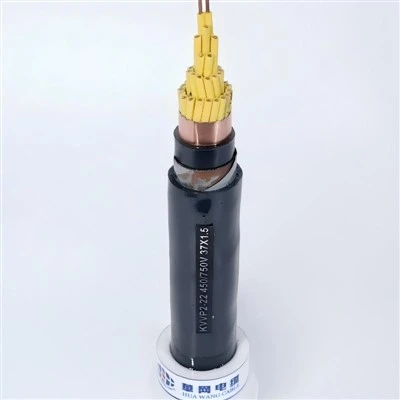
If you are in the aerospace industry and are looking for reliable control cables for your projects, I invite you to contact us for a detailed discussion. We can provide you with customized solutions based on your specific requirements. Let’s work together to ensure the success of your aerospace endeavors.
Wire References
- ASTM International Standards on Aerospace Materials
- "Aerospace Systems Design" by Felix T. Haack
- Technical reports from major aerospace manufacturers on control system components
Anhui Huawang Cable Co., Ltd.
As one of the most professional control cable manufacturers and suppliers in China, we also support customized service. If you’re going to buy discount control cable, welcome to get pricelist from our factory. Quality products and reasonable price are available.
Address: No. 32, East Street, Batian Street, Datong Town, Tianchang City, Anhui Province
E-mail: Linda@huawangcable.com
WebSite: https://www.huawang-cable.com/
