Hey everyone, it’s Jake here, and if you’re in the solar or semiconductor game, you’ve probably stumbled on the term “off-grade silicon” more times than you can count. I run a small (but mighty) off-grade silicon supplier, and let me tell you, I get so many questions from folks asking, “Why does the size and shape of this stuff even matter? Isn’t silicon just… silicon?” Spoiler: it’s way more nuanced than that. If you’ve ever sat in a supply chain call staring at a pallet of silicon that’s not quite 99.999% pure but still worth way more than scrap metal, this one’s for you. Off-grade Silicon
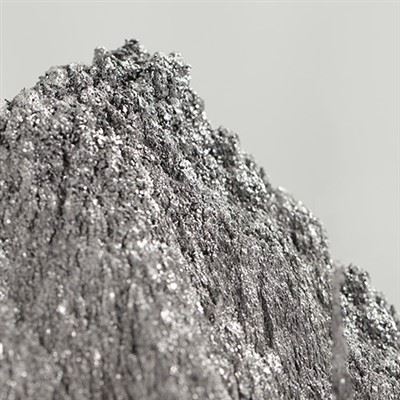
First off, let’s get one thing straight: off-grade silicon isn’t “bad” silicon—it’s just silicon that missed the strict purity and dimension marks set for top-tier PV cells or microchips. Like, maybe it has a tiny bit more phosphorus than the spec sheet says, or it’s got a few surface scratches that make it unsuitable for wafers. But here’s the kicker: that doesn’t mean it’s useless. The size and shape of those off-grade bits? They’re make-or-break for exactly what we can sell ‘em for, and honestly, that’s the part most buyers don’t think about until they’re stuck with a pallet that’s gathering dust in their warehouse.
Let’s start with size, because that’s the first thing I check when a shipment rolls in. Off-grade silicon comes in basically three size buckets: chunks (think palm-sized to softball-sized), granules (like coarse sand, 1mm to 5mm), and powder (super fine, less than 1mm). Each size hits a totally different market, and getting it right is non-negotiable.
Take the chunks first. We call these “run-of-the-heap” chunks, and most of the time they come from when a big ingot (the solid block they cut wafers from) gets dropped mid-processing, or has a bad spot so engineers just hack off the good parts and leave these lumpy bits. What are they good for? Oh, so many things, actually. One of our biggest buyers is a metal refinery that uses off-grade silicon to make aluminum-silicon alloys—you know, the stuff that’s used for engine parts in cars? Those alloys need specific silicon content, and as long as the chunks are over a certain size, they don’t blow away in the melting furnace. Wait, but size matters here: if the chunks are too small, they vaporize before they can mix properly, and the alloy gets messed up. Last year we had a batch of palm-sized chunks that almost went to scrap because a new guy thought they were too “small” for the alloy guys—turns out, the refinery’s furnace uses a feed mechanism that works best with chunks between 2 and 4 inches. We sorted ‘em, found a refinery that runs smaller furnaces, and sold the whole batch for 10x what the scrap yard offered. Win, win.
But wait, what if the chunks are irregularly shaped? Like, they’re not a nice flat piece, they’re jagged all over? That’s actually a plus for some uses, like making silicone sealants or lubricants. Silicone manufacturers need silicon that can mix evenly with other chemicals, and jagged chunks have more surface area than smooth, rounded ones. So they dissolve faster, which means less time waiting around for the mixture to be ready, which saves them money on energy costs. I had a client last month who was buying smooth, round off-grade silicon for his sealant line, and he complained that his production line was slow. We swapped him some jagged chunks from the same shipment, and he texted me a week later saying his output went up 15%. Who knew shape could mess with a production line that much?
Now, granules. This is the workhorse of off-grade silicon, in my opinion. Most granules come from when ingots are cut into wafers and the leftover sawdust (wait, no—sawing sludge, it’s called, but basically tiny silicon particles that get mixed with coolant) is filtered out, dried, and sorted. Granules are super versatile. They go into a lot of agricultural stuff, actually—like soil amendments for plants that need silicon to fight off pests. And here’s where size gets super specific: if you have granules between 2mm and 3mm, they’re perfect for that. Too fine, and they blow away when you spread ‘em on fields. Too big, and they don’t dissolve in the soil water fast enough. We had a client a couple years back who tried using fine powder for his soil amendment and got a bunch of complaints because it clogged his spreaders. We sent him our medium-grade granules, and he’s been a repeat customer ever since. The other big use for granules? It’s a filler in construction materials, like concrete. Adding a little silicon granule makes concrete stronger and more resistant to cracking. The construction guys I work with say they don’t care as much about purity as they do about consistent granule size—if the granules are all the same size, they mix evenly into the concrete, which keeps the structural integrity high.
Then there’s powder. Super fine, like talcum powder but silver-colored. Most of this comes from grinding up off-grade chunks that are too small for anything else. What’s powder used for? Oh, things like 3D printing metal parts, or making lithium-ion batteries (wait, yeah, silicon is a big deal in battery anodes now), or even as a thickener in some paints. But shape matters here, too—wait, it’s powder, so how does shape matter? Because it’s particle shape. If the powder has round particles, it flows better through machinery, so it’s easier to mix into paints or battery slurries. If it’s angular, that’s good for 3D printing because it bonds better with other metal particles. I once sold two batches of the same purity powder to two different clients—one got round particles for his battery work, the other got angular for his 3D printing. The battery client had zero issues, but the 3D printing guy said his powder kept clogging his printer nozzles because the angular particles didn’t flow right. We swapped a small portion, and he hasn’t had a problem since. It’s like fitting puzzle pieces, y’know? If every piece is the wrong shape, the whole puzzle falls apart.
Now, let’s talk about the stuff that messes people up: off-size or weird-shaped silicon. Like, if you have a chunk that’s 6 inches wide, way too big for the alloy refineries, or a granule that’s 0.5mm, too small for soil amendments. What do you do with that? A lot of people would just send it to a scrap yard, but we’ve found that even that stuff has a home. We had a batch a while back that was all flat wafer offcuts—like thin, 1mm thick pieces that were the exact size of a credit card, but they had tiny scratches so they couldn’t be used for PV cells. At first, we thought they were useless, until a client who makes custom solar-powered phone chargers bought them. He cuts those flat pieces in half, sands the edges, and uses them as the base for small PV modules. Because they’re already flat, he doesn’t have to do much shaping, which saves him a ton of time. That batch would’ve gone for scrap for like $200 total, but we sold it for over $2,000. That’s the kind of win you get when you actually look at the shape of your off-grade silicon instead of just writing it off.
Wait, but let’s get real—this isn’t all sunshine and rainbows. There are times when size and shape make it really hard to move product. Like, last year we had a big shipment of off-grade silicon that was all lumpy, mixed-size chunks, no consistent shape at all. We tried selling it to the alloy guys, but they needed uniform sizes. Tried selling to the sealant guys, but the lumps were too big. Tried grinding it down to granules, but it was a mix of sizes, so we had to do extra screening. That cost us a bunch of time and money, but we ended up selling it to a company that makes silicon carbide for grinding wheels—they actually like the inconsistent shape because it makes the grinding wheels more durable. But that took us two months to find that buyer, which meant we had that shipment tied up in our warehouse, costing us storage fees. That’s the downside, for sure—if your off-grade silicon is all over the place in size and shape, you can’t just slap a label on it and sell it fast. You have to do extra processing, sorting, screening, which eats into your profits.
But here’s the thing that makes my job worth it: off-grade silicon isn’t a waste product. It’s a resource that’s being wasted because most people don’t understand how size and shape change what it can be used for. We’re not just a supplier—we’re a middleman (well, a problem-solver) between the companies that have this leftover stuff and the companies that need it. I’ve had clients call me panicking because they have a pallet of silicon they can’t get rid of, and we’ll sort through it, figure out the size and shape, match it to someone who needs exactly that. Last month, a semiconductor manufacturer called me because they had a bunch of tiny, granular off-grade silicon that was full of dust. We sent it to a company that uses it to make water filters—they wanted the small particles to trap contaminants. Because the particles were irregularly shaped, they had more surface area, so the filters worked better. That’s the kind of story that makes me love this job.
Now, if you’re someone who’s working with off-grade silicon—whether you’re a manufacturer with leftover product, or a buyer looking for a more sustainable and cheaper material—this is why you can’t just ask for “off-grade silicon.” You have to ask about size ranges, particle shape, even surface texture. If you’re buying granules, do you need 1mm-3mm or 2mm-4mm? Are you okay with angular or round particles? Those small details are the difference between a product that works for you and one that’s just taking up space.

I know a lot of people in this industry care about sustainability, right? Off-grade silicon is way better than sending it to landfill, or even recycling it by melting it down (which uses a ton of energy). By using it for secondary applications, we’re cutting down on waste and reducing the need to mine new silicon, which is a win for everyone. And that’s something I’m really proud of—we’re not just selling product, we’re helping make this industry a little more sustainable.
SiC If you’ve got off-grade silicon sitting around that you don’t know what to do with, or if you’re tired of buying off-grade silicon that doesn’t work for your production line, hit us up. We can walk through your stock, sort it, find the right buyers, or help you source exactly what you need. No fancy jargon, no hoops to jump through—just real talk about real silicon.
References
- International Energy Agency. (2021). The Role of Secondary Silicon in a Circular PV Supply Chain. IEA Photovoltaic Power Systems Programme.
- American Foundry Society. (2020). "Alloying Additives: Particle Size and Shape Effects on Aluminum-Silicon Alloy Properties." Foundry Management & Technology.
- Silicon Valley semiconductor Industry Association. (2022). "Secondary Silicon Applications: Beyond Wafers and Cells." SVIA Sustainability Report.
- US Department of Agriculture. (2021). "Silicon Soil Amendments: Particle Size and Shape for Crop Protection." Agricultural Research Service.
Anyang Baitengxin Metal Co., Ltd.
As one of the most professional off-grade silicon manufacturers in China, we have world-leading production equipment and strong manufacturing capabilities. Please feel free to buy high quality off-grade silicon for sale here from our factory. Good service and reasonable price are available.
Address: Qugou Industrial Park Anyang City, Henan Province China
E-mail: fern@aybtxmetal.com
WebSite: https://www.aybtx-metal.com/
